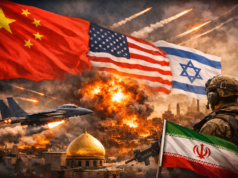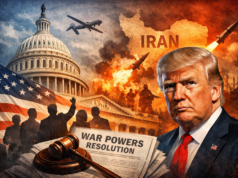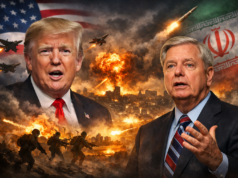
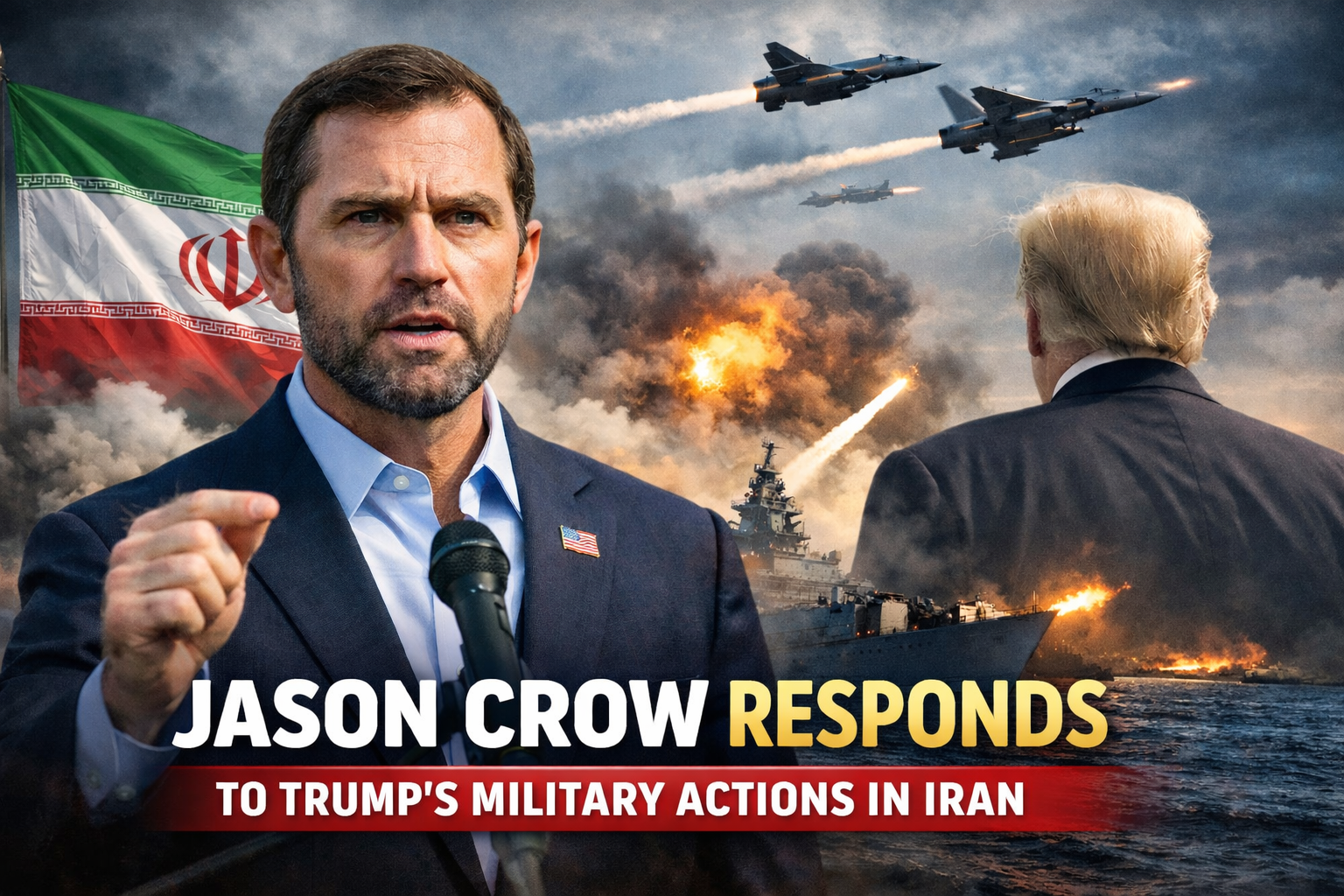
Rep. Jason Crow responded sharply after President Donald Trump announced “major combat operations” against Iran, a move the White House framed as a multiday campaign to damage Iran’s missile capabilities and naval forces.
Crow, a Colorado Democrat and combat veteran, argued that the administration chose war without Congress and without a defined end state, and he urged lawmakers to return to Washington to vote on a War Powers Resolution.
The clash between the administration and Congress over Iran now sits at the center of a fast-moving foreign policy crisis. Trump tied the strikes to Iran’s nuclear and ballistic missile posture and paired the military operation with unusually direct rhetoric about political change inside Iran.
Crow, by contrast, framed the decision as another example of Washington reaching for force first, while everyday Americans and service members absorb the consequences.
What Trump ordered and how the administration described the mission
Trump said the United States began “major combat operations” in Iran and warned that Americans could suffer casualties even as his team sought to limit risk to U.S. personnel in the region.
Reuters reported that Trump described the strikes as efforts to destroy Iranian missiles and “annihilat[e]” Iran’s navy, after repeated warnings tied to Iran’s nuclear and missile programs.
The U.S. military named the campaign “Epic Fury,” and officials signaled that operations could extend for several days rather than stay confined to a single wave.
The Washington Post also described an opening salvo that included ship-launched Tomahawks and air-launched munitions.
Trump also paired the strikes with rhetoric aimed at Iran’s internal politics. He told Iranians to “take over your government,” and he urged elements of Iran’s security apparatus to lay down arms, according to Reuters and the Post’s reporting.
That messaging sharpened the administration’s posture from “deterrence” toward something closer to coercive regime pressure, even as officials insisted they would avoid a prolonged war.
Iran, meanwhile, responded with retaliatory launches toward U.S. facilities in the region, according to U.S. officials cited by the Post.
Those dynamics raise the stakes for U.S. force protection and for escalation control across the Gulf and eastern Mediterranean.
Jason Crow’s response: what he emphasized and why it matters
In a press release from his official House office, Crow argued that Trump had “plung[ed]” the country into another Middle East war and described the decision as optional rather than unavoidable.
He stressed three core points: Congress did not authorize hostilities, the administration offered no clear endgame, and the public did not show broad support for another large conflict.
Crow also drew on his own military background, saying he deployed to war three times and learned how quickly political leaders can talk up conflict while others bear the cost.
That veteran framing matters because it positions his objection as procedural, strategic, and experiential rather than purely partisan.
Crow also attacked the logic of “regime change” language, arguing that Americans want the U.S. to exit the business of toppling governments abroad.
Trump, however, described “freedom” for Iranians as a central goal in comments to the Washington Post, and he encouraged Iranians to seize the moment once strikes ended.
That split highlights a broader debate: does military pressure aim at narrow threat reduction, or does it aim at political transformation inside Iran?
Crow warned that Washington often fails to control the downstream consequences when it chooses the second path.
Finally, Crow demanded immediate congressional action focused on oversight and troop safety. He called on Congress to return to Washington “immediately” to vote on a War Powers Resolution and to “ensure the safety of our servicemembers.”
That call mirrors the practical concern that retaliation can expand targets beyond Iran and Israel to U.S. bases and ships across the region.
It also signals that Crow wants Congress to shift from reactive statements to binding votes that constrain or authorize ongoing operations.
Even if Congress fails to pass restrictions, the push can force classified briefings, public debate, and clearer strategic messaging.
The War Powers fight: what Congress can do and what the law requires
The Constitution gives Congress power over war funding and declarations, while the president serves as commander in chief, a tension that often surfaces when presidents initiate hostilities without a new authorization.
Congress enacted the War Powers Resolution in 1973 to create reporting requirements and time limits when the executive deploys forces into hostilities or imminent hostilities.
The law contemplates a framework where the president consults with Congress and submits reports that keep lawmakers informed while operations unfold.
It also sets a clock that can force either authorization or disengagement, depending on the circumstances and the legal interpretation in play.
In practice, the War Powers framework relies on two levers: reporting and duration limits. The statute includes ongoing reporting provisions to Congress during hostilities.
The text also references a 60-day period with a potential additional 30-day extension tied to military necessity and safe withdrawal.
That structure explains why lawmakers so often demand a vote when a president begins a campaign expected to last “several days” and potentially longer if retaliation expands the fight.
Crow’s demand for an immediate vote reflects that time pressure and the political need to put members on record.
A War Powers vote can take multiple forms. Congress can pass a measure that directs the removal of U.S. forces from hostilities, or it can pass an authorization that sets objectives, geographic boundaries, and reporting requirements.
Either approach can reshape the operational environment by clarifying what the U.S. seeks to achieve and what it refuses to do, such as deploying ground forces or pursuing open-ended regime change.
Even short of passage, the process can extract intelligence assessments, legal opinions, and targeting rationales that the executive might otherwise keep internal.
That dynamic sits at the heart of Crow’s argument that the administration “owes Congress and Americans answers.”
How other lawmakers reacted and where the coalition lines formed
Crow did not stand alone in criticizing the administration’s move, and the reaction quickly spilled across party and chamber lines. Axios reported that Sen. Tim Kaine urged the Senate to return and vote on a War Powers Resolution aimed at blocking U.S. forces from hostilities against Iran.
Axios also described other lawmakers echoing the demand for an immediate vote, while noting that administration officials briefed senior congressional leaders ahead of the strikes.
At the same time, several Iran hawks praised the operation and framed it as necessary to protect Americans and deter Iran’s missile and nuclear ambitions.
Those competing reactions set up a familiar Washington pattern: procedural objections about authorization collide with substantive arguments about deterrence and threat reduction.
Briefings also became a flash point. Reuters reported that Secretary of State Marco Rubio contacted the “Gang of Eight” before the strike, and sources described additional notifications as the operation approached.
That process can satisfy political expectations of consultation for leadership, but it does not replace an authorization vote from the full Congress.
Crow’s statement implicitly draws that distinction: he acknowledged the administration’s obligation to answer Congress, and he demanded that lawmakers exercise formal war powers rather than accept limited briefings.
As the operation continues, the administration will likely face pressure to expand briefings beyond leadership to rank-and-file members, especially those with large military constituencies.
The debate also includes a strategic argument about “ends” and “means.” Critics, including Rep. Jim Himes in Reuters’ reporting, described the campaign as a “war of choice” without a “strategic endgame,” language that overlaps with Crow’s critique.
Supporters counter that Iran’s missile inventory, nuclear trajectory, and regional proxy network create a threat that demands decisive action.
That clash matters because it shapes congressional votes: members often split not only on legal authority, but also on whether strikes will reduce risk or multiply it.
Crow’s response lands squarely on the “risk multiplication” side, especially when leaders talk about regime change.
Strategic risks: escalation control, retaliation, and regional spillover
Even limited strike campaigns can widen quickly when Iran retaliates against U.S. forces and regional partners. The Washington Post reported that Iran targeted multiple U.S. bases, including a support facility tied to the U.S. 5th Fleet in Bahrain, based on officials’ accounts.
That reality reinforces Crow’s focus on service member safety, since retaliatory salvos can force the U.S. to choose between escalation and restraint under pressure.
It also raises the risk of miscalculation, where one side interprets a strike as a prelude to invasion while the other side intends only to degrade capabilities.
In that environment, clear objectives and credible off-ramps often matter as much as military capacity.
The administration’s public messaging complicates escalation management. Trump framed the mission in terms of “freedom” and spoke directly to Iranians about taking control of their government, according to the Post and Reuters.
Crow argued that Americans want the U.S. out of “regime change” efforts, and he warned that decades of conflict show how badly those efforts can go.
When leaders pair military action with political transformation goals, adversaries can treat strikes as existential, which can push them toward broader retaliation rather than calibrated response.
That dynamic also complicates diplomacy, because negotiators struggle to sell deals at home when the other side doubts that the U.S. seeks only limited objectives.
Domestic stakes: costs, priorities, and political accountability
Crow anchored part of his argument in the domestic burden of long wars. He cited the human and financial costs of “endless war” and contrasted those costs with Americans’ everyday struggles to afford essentials.
That framing aims to move the debate beyond foreign policy elites and toward voters who remember Iraq and Afghanistan as expensive, sprawling, and hard to end.
Trump, meanwhile, acknowledged that casualties “often happen in war,” and he argued that the mission served a “noble” long-term purpose, according to Reuters and the Post.
Those competing narratives can shape public opinion fast, especially if Iran’s retaliation disrupts travel, energy markets, or regional security.
Accountability also runs through congressional procedure. When Congress votes on war powers, members publicly define what they will support, what they will fund, and what they will reject.
Crow’s demand that Congress return to Washington reflects a belief that lawmakers should not outsource war decisions to briefings among leadership, even if the administration consults them.
If lawmakers dodge a vote, they can leave the executive with broad discretion while still criticizing outcomes later, a pattern that fuels distrust in institutions.
A vote, even a messy one, forces clarity about objectives, timelines, and acceptable risk.
What happens next: briefings, votes, and possible end states
Several immediate steps now look likely. The administration has already briefed senior leaders, and it will face pressure to brief all members as the campaign continues and as operational details emerge.
Congressional leaders could accelerate a War Powers vote, especially if senators and representatives return early or if members force privileged resolutions to the floor.
Crow’s statement explicitly calls for that path, and similar demands from other lawmakers suggest that leadership will struggle to keep the issue bottled up.
The timing of any vote will matter, because a vote after major escalation can look symbolic rather than constraining.
Strategically, the end state remains the biggest open question. Trump framed the mission as both threat elimination and a historic opportunity for Iran’s political future, while critics like Crow and Himes questioned the existence of a credible endgame.
A narrow end state would focus on degraded missile and naval capacity plus a diplomatic off-ramp that pauses escalation and restarts talks.
A broader end state would seek internal political change in Iran, but that path typically demands sustained pressure, unpredictable timelines, and a high risk of mission creep.
Congress’ response—especially on war powers—will influence which path the administration can sustain.
Bottom line
Jason Crow’s response to the Trump administration’s military actions in Iran centers on authorization, strategy, and the human cost of escalation. He argues that the president chose war without Congress, without clear objectives, and with rhetoric that drifts toward regime change.
Trump and his supporters argue that Iran’s missile and nuclear posture requires decisive action and that “Epic Fury” can protect Americans and allies.
In the coming days, Congress will likely decide whether to formalize its role through a War Powers vote or to limit itself to oversight and after-the-fact critique.