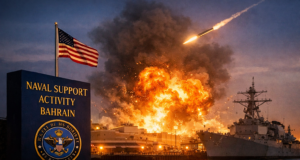
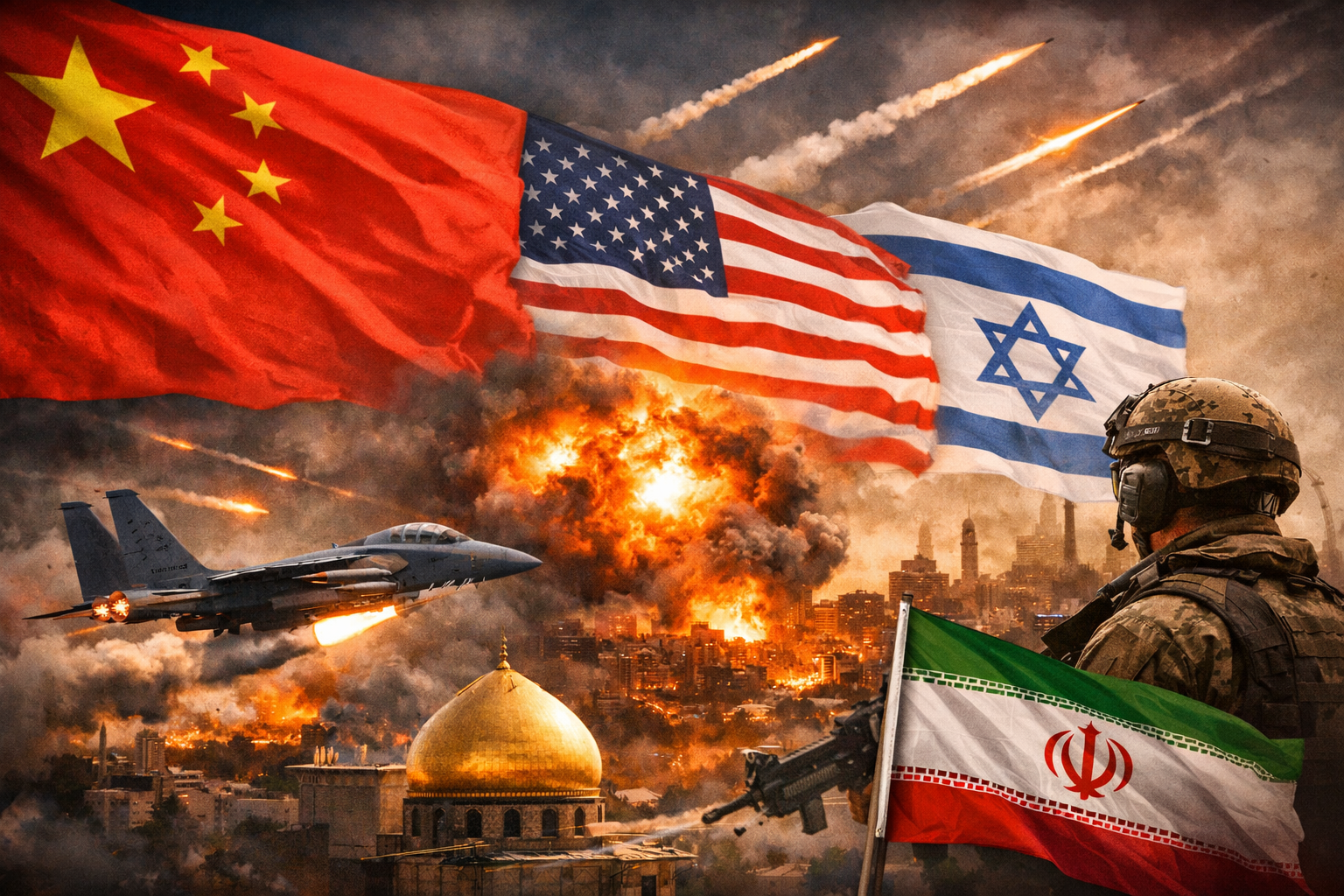
China called for an immediate ceasefire on February 28, 2026, after the United States and Israel launched a coordinated wave of strikes on Iran, a move that pushed the Middle East into a new phase of open confrontation and triggered fears of a wider regional war. Beijing’s message paired urgency with familiar themes: respect for sovereignty, opposition to escalation, and a return to negotiations.
China’s statement landed as Iran responded with retaliatory attacks across the region, while diplomats rushed to the United Nations for an emergency Security Council session that Russia and China requested.
The conflict now tests several fault lines at once: deterrence between Iran and Israel, U.S. military posture in the Gulf, and China’s role as a global power with major energy and trade interests that run through the Middle East.
What China said and what it signaled
China’s foreign ministry said it felt “highly concerned” about the U.S.-Israeli strikes and urged an “immediate stop” to military action to prevent further escalation. It also emphasized Iran’s sovereignty, security, and territorial integrity, and it called for resumed dialogue and negotiation to preserve regional stability.
That wording matters for two reasons.
First, China framed the crisis around escalation control, not around endorsing either side’s military rationale. Beijing often leans on sovereignty language when it wants to oppose cross-border uses of force without committing to a broader security alignment.
Second, China positioned itself as a diplomatic actor at the UN rather than a military actor in the region. The Security Council track lets Beijing apply pressure and shape the international narrative while keeping distance from battlefield decisions.
What happened: the February 28 strikes and immediate fallout
On February 28, the United States and Israel launched joint strikes on targets in Iran. Israeli officials described the operation as “pre-emptive” and tied it to perceived threats linked to Iran’s nuclear and missile programs. Reporting described explosions in Tehran and rapid escalation steps inside Israel, including emergency measures and airspace restrictions.
Iran, for its part, vowed retaliation and warned that it would target U.S. bases in the region if Washington joined attacks on Iranian territory.
As the day unfolded, international concern focused on three immediate risks:
A rapid cycle of tit-for-tat strikes that expands targets and geography
A regional spillover that draws in Gulf states that host U.S. forces
A disruption to shipping and energy flows through the Strait of Hormuz
Reports also described significant civilian harm, including Iranian authorities’ accounts of strikes that hit civilian areas. One report said a strike hit a primary school in southern Iran and caused mass casualties, adding urgency to calls for de-escalation.
The UN Security Council: China and Russia push for emergency action
China and Russia requested an emergency UN Security Council meeting in response to what they described as an “unprovoked act of armed aggression.” Diplomats scheduled the session for February 28 at 4 p.m. in New York, with the UK chairing under its rotating presidency. France, Bahrain, and Colombia also supported the call.
UN Secretary-General António Guterres urged an immediate cessation of hostilities and a return to negotiations, warning that escalation would harm civilians and destabilize the region.
For China, the Security Council venue offers practical leverage even without direct military involvement. Beijing can:
Push language that demands a ceasefire and calls for restraint
Frame the crisis through sovereignty and civilian protection
Coordinate with other permanent members to shape a draft resolution or presidential statement
Signal costs to escalation without threatening unilateral action
Still, the Council often struggles to produce binding outcomes when permanent members split sharply. A veto threat can block resolutions, while softer statements can land as symbolic rather than operational.
Why China moved quickly: stability, energy, and global positioning
China’s call for an immediate ceasefire reflects more than generic diplomacy. It aligns with Beijing’s concrete interests in three overlapping areas.
1) Energy security and price stability
The Gulf and the Strait of Hormuz sit at the center of global oil flows. Even limited fighting can raise prices through fear, insurance costs, rerouting, and risk premiums.
On February 28, market coverage highlighted concerns about supply disruption and shipping risk. Reuters reported OPEC+ discussions about a larger output increase than previously expected, as producers watched the conflict’s impact on supply expectations.
Analysts also warned that Brent prices could climb further if the conflict disrupts supply, even if the world still expects a broader surplus under calmer conditions.
For China, higher oil prices create domestic economic pressure and complicate trade and inflation management. That reality tends to pull Beijing toward fast de-escalation.
2) Protecting shipping lanes and commercial risk
Shipping insurers reportedly began canceling or repricing war-risk policies for vessels operating in the Gulf and near the Strait of Hormuz, a sign that private markets already priced in higher risk.
Even if physical supply keeps moving, insurance and security costs can raise delivered energy prices and slow trade. China, as the world’s largest goods trader, has a direct stake in keeping maritime chokepoints open.
3) Great-power posture without direct entanglement
China has tried to present itself as a power that can talk to all sides in the Middle East. It maintains ties with Iran, but it also builds deep economic and political relationships with Gulf monarchies and other regional governments.
In a crisis that involves the U.S., Israel, and Iran at once, China can gain diplomatic credibility if it helps cool escalation. At the same time, it risks reputational damage if it looks ineffective, absent, or selectively principled.
Outside analysts highlighted this tension: China wants influence, but it also prefers low-risk diplomacy that avoids direct entanglement.
China and Iran: why the relationship shapes Beijing’s calculus
China has long served as a critical economic partner for Iran, especially under sanctions pressure. Many assessments identify China as the largest destination for Iranian crude exports, which makes Iran’s energy trade with China central to Tehran’s revenue and to Beijing’s energy sourcing strategy.
China and Iran also signed a long-term cooperation framework in 2021, which linked the relationship to broader infrastructure and economic cooperation discussions.
That relationship does not automatically translate into Chinese control over Iranian decision-making. It does, however, mean Beijing has more channels than most capitals to communicate with Tehran at senior levels, and it gives China a strong incentive to prevent war from damaging Iranian production or blocking shipping routes that carry Iranian exports.
What China can actually do next
A ceasefire demand makes headlines, but implementation depends on tools and leverage. China has several pathways, each with limits.
Security Council diplomacy
China can press for a formal UN product: a resolution, a presidential statement, or a negotiated call for restraint. China and Russia already set that process in motion by requesting the emergency session.
The limits here come from Council politics. If the U.S. rejects the framing or threatens a veto, China may settle for softer language, or it may use the debate mainly to register opposition and rally non-Western states.
Direct calls and backchannel talks
China can use high-level diplomacy to urge Tehran to limit retaliation and to urge Washington and Jerusalem to pause further strikes. Beijing often prefers leader-to-leader or foreign-minister channels because they deliver faster than multilateral text negotiations.
The challenge: each party will weigh battlefield incentives. If leaders believe more strikes will improve their position, they may delay diplomacy.
Economic signaling
China can, in theory, adjust trade, energy purchasing, banking access, or project activity. In practice, China tends to avoid sudden moves that disrupt energy markets or create reputational risk for Chinese firms.
Beijing may reserve economic pressure for later phases, if it sees escalation trends that threaten shipping lanes or oil prices.
Humanitarian and evacuation efforts
China can prioritize protection of its citizens and companies in the region and support humanitarian coordination through the UN. These actions do not stop a war, but they can reduce harm and signal responsibility.
Why a ceasefire looks hard right now
A ceasefire requires more than a public call. It requires both sides to believe they gain more from stopping than from continuing.
Three factors complicate that calculation.
Competing narratives about legitimacy and deterrence
Israel and the U.S. have framed the strikes as necessary to address threats tied to Iran’s nuclear and missile capabilities, while Iran has framed the attacks as violations of sovereignty and international law.
As long as both camps treat the conflict as a deterrence test, they may see continued strikes as a way to restore credibility rather than as a cost to avoid.
Regional spillover pressures
Iran’s network of partners and aligned groups across the region increases the number of potential flashpoints. Any attack on U.S. forces in the Gulf, any strike near critical infrastructure, or any maritime incident can widen the conflict rapidly.
Domestic politics and leadership signaling
Leaders in wartime often prioritize domestic political strength and alliance signaling. Calls for ceasefire can land as weakness if leaders think their publics demand visible resolve. That dynamic can delay pauses even when both sides quietly fear escalation.
Economic shock channels: oil, shipping, and market volatility
Markets typically react first to the possibility of disrupted shipping rather than to confirmed physical shortages.
AP reporting outlined the key scenarios energy traders watch: limited strikes can still lift prices through fear, while broader conflict that threatens Hormuz traffic can push prices much higher. The report noted that the strait carries roughly a fifth of global oil flows, and it highlighted the market’s sensitivity to any sign of closure or sustained disruption.
Reuters reporting also described producers weighing supply adjustments as a hedge against disruption, a sign that major exporters already see elevated risk.
For China, these market channels add urgency. Beijing has to manage energy affordability at home while trying to avoid the perception that it benefits from war-driven price moves.
What a workable ceasefire might involve
Ceasefires in this kind of confrontation rarely start with a comprehensive peace deal. They usually start with narrow, verifiable steps that reduce the chance of miscalculation.
A realistic first package could include:
A halt to new cross-border strikes and missile launches
A commitment to protect civilian infrastructure and critical energy facilities
A maritime deconfliction mechanism for the Gulf and the Strait of Hormuz
A fast-track diplomatic channel that restarts nuclear and regional-security talks
A timetable for further negotiations under UN or third-party facilitation
China’s statement emphasized dialogue and negotiation, which fits this incremental model.
The parties may still insist on preconditions, and those demands can block early progress. But even a short pause can lower immediate risks to civilians and to regional trade.
Scenarios to watch in the coming days
The crisis can move in several directions quickly. These scenarios capture the most plausible near-term paths.
1) Limited escalation, rapid diplomacy
If both sides absorb early blows and fear uncontrolled expansion, they may accept a short pause and shift to UN or third-party talks. China’s ceasefire call and the Security Council session create a diplomatic frame for this path.
2) Managed escalation with wider geography
Iran could continue retaliatory actions against U.S. positions or regional targets, while the U.S. and Israel expand strikes inside Iran. This path raises the chance of maritime incidents and energy disruption.
3) Hormuz shock
Even partial disruption, intensified inspections, or heightened insurance cancellations can create a shipping shock that forces rapid de-escalation talks, regardless of battlefield goals.
4) Protracted campaign
A longer campaign can emerge if leaders believe they can degrade capabilities decisively. Analysts have debated the strategic effects and the legal and political risks of that approach, especially given the probability of unintended escalation.
Bottom line: China’s ceasefire demand sets a diplomatic marker
China’s demand for an immediate ceasefire does not guarantee de-escalation, but it sets a clear diplomatic marker at a moment when military logic could dominate. Beijing aligned its message with sovereignty language, conflict containment, and renewed negotiation, and it reinforced that stance by moving the issue to the UN Security Council alongside Russia.
Whether that pressure changes events will depend less on speeches than on incentives: what Washington, Jerusalem, and Tehran think they gain from continuing versus stopping, and how quickly markets and regional governments raise the costs of escalation. Reporting for this story draws on public statements and coverage from Reuters, the Associated Press, and China’s foreign ministry.