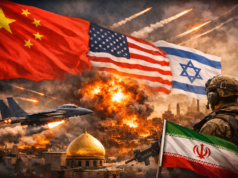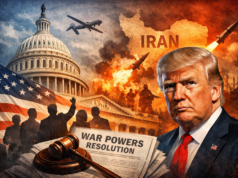
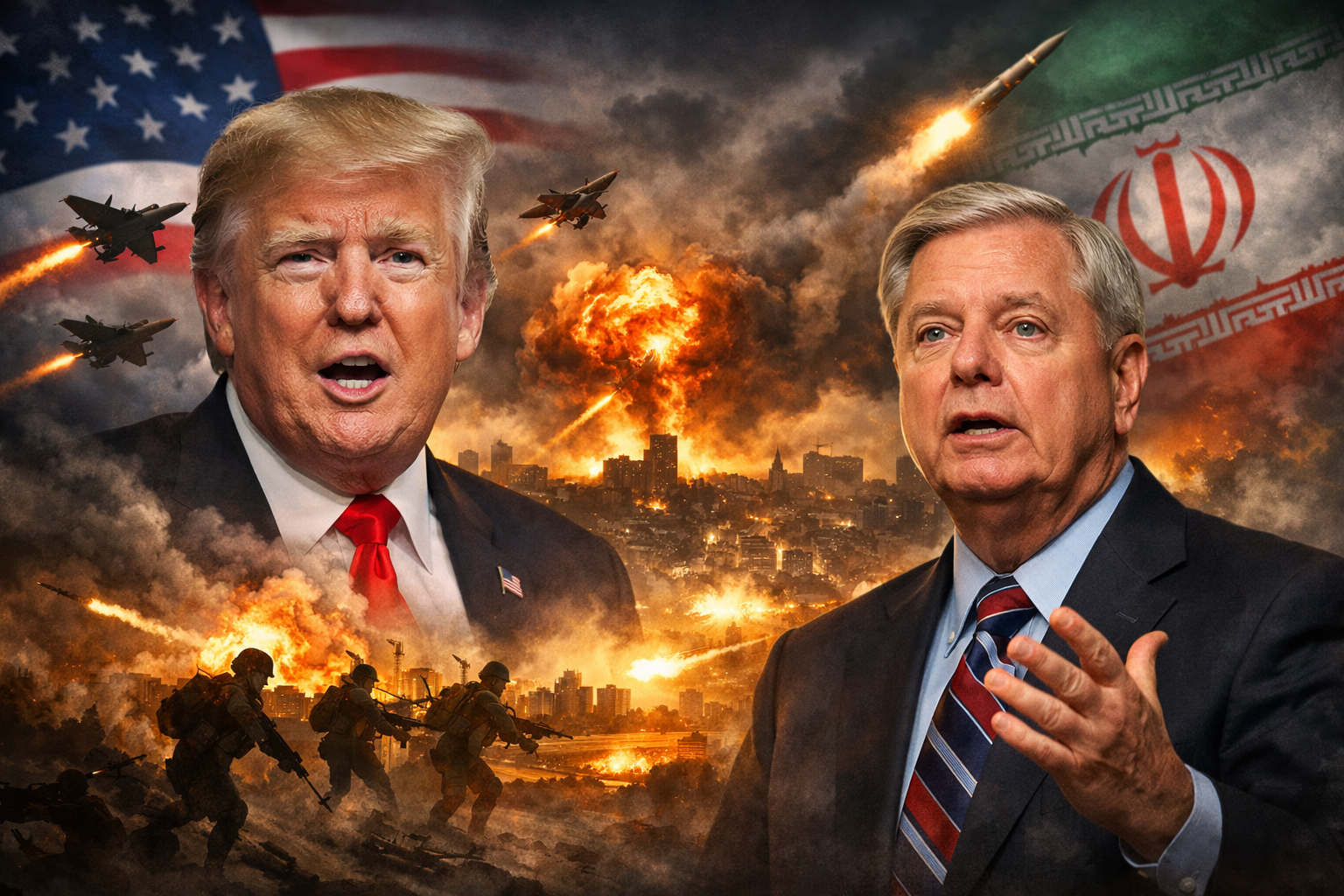
Sen. Lindsey Graham’s declaration that “President Trump has met the moment” landed as the United States and Israel launched a major new round of strikes against Iran, an operation the administration and Pentagon have described as large in scale and open-ended in duration. Graham, one of the Senate’s most outspoken foreign-policy hawks and one of Trump’s most reliable allies on national security, framed the action as a rare chance to reshape the Middle East by pressuring—or toppling—Iran’s clerical leadership. His praise also highlighted a growing fault line in Washington: supporters cast the operation as overdue deterrence, while critics warn about escalation, legality, and the risk of another prolonged Middle East conflict.
Graham’s “met the moment” phrasing does more than cheerlead a president. It signals how a key bloc of congressional Republicans wants the public to interpret the stakes: a decisive turning point rather than a discretionary gamble. The coming days will test whether that framing holds as Iran responds, allies calculate their exposure, and lawmakers push for briefings and votes that could constrain—or ratify—the campaign.
What happened: the spark behind Graham’s comments
Israel said it launched what it called a pre-emptive attack on Iran, with Israeli officials pointing to threats tied to Iran’s nuclear and missile programs. Reports of explosions in Tehran followed, and Israel moved quickly to close schools, restrict gatherings, and shut its airspace as it prepared for retaliation. U.S. involvement came into sharper focus as multiple outlets reported American strikes underway, and U.S. officials indicated that planning and coordination between Washington and Israel had taken place over months, with the final timing set weeks earlier.
On the U.S. side, Trump announced the operation in a video message posted to social media, describing “major combat operations” and urging Iranian security forces to lay down their arms while encouraging Iranian civilians to rise up and “take over” their government. U.S. officials and congressional leaders said they expected briefings to all senators, and they confirmed that top congressional leadership groups received advance notice that military action might occur.
What Lindsey Graham said—and what he’s signaling
Graham praised the operation as “well-planned” and predicted a successful outcome, while acknowledging that the campaign could turn violent and extensive. In separate public posts and statements, he cast the strikes as the beginning of the end for Iran’s theocratic leadership and urged Iranian forces, including the IRGC and other security services, to stand down. He also described Trump’s message as a catalyst for historic change and echoed the president’s appeal for Iranians to seize the moment.
The key subtext in Graham’s framing centers on two claims: first, that Iran’s leadership represents a persistent threat through regional proxy groups, missiles, and nuclear ambitions; second, that a coordinated military campaign can accelerate internal political collapse or force major concessions. Graham wants audiences to see the operation less as a limited strike package and more as a strategic bet on regime pressure. That distinction matters because it shapes expectations about duration, targets, and what “success” even looks like.
Why Graham’s support carries weight inside the GOP
Graham has built his modern political brand around muscular U.S. foreign policy, close alignment with Israel, and a willingness to use force against adversaries when diplomacy stalls. When he praises Trump in maximal terms—“met the moment”—he offers mainstream cover for a policy that might otherwise split conservatives between interventionist hawks and restraint-focused skeptics.
That cover matters because the administration launched the operation without first seeking a specific congressional authorization tailored to Iran. In past conflicts, presidents often rely on claims of imminent threat, existing statutory authorities, or inherent Article II powers to justify action. A prominent senator praising the move as both necessary and historically significant helps rally party discipline, at least early on, while the facts on the ground remain fluid.
The backlash: war powers, oversight, and fear of escalation
Almost immediately, Democrats and at least one notable Republican voice demanded Congress reassert its authority. Sen. Tim Kaine called for a prompt vote on a War Powers Resolution aimed at limiting U.S. hostilities against Iran, and lawmakers argued that Trump owed the public and Congress a clearer objective, a strategy to prevent escalation, and a plan to avoid another costly quagmire. Rep. Thomas Massie criticized the strikes as unauthorized acts of war, while Rep. Ro Khanna pressed for a vote to halt the conflict.
The critique follows a familiar pattern: lawmakers point to constitutional requirements around war-making, then cite past intelligence failures and mission creep—especially the post-9/11 era—as cautionary examples. Supporters respond with a different lesson from history: they argue that delayed or limited responses embolden adversaries and endanger U.S. forces and allies. The debate will intensify as briefings reveal what intelligence the administration used to justify urgency and what end-state it seeks.
The central question: is this a limited campaign—or a regime-change effort?
Graham’s language—and Trump’s own rhetoric—leans toward regime pressure, not merely deterrence. That creates a higher bar for success and a broader range of potential consequences. Limited strikes can claim narrow objectives, like degrading specific capabilities. Regime-change strategies, even when framed as supporting domestic movements, often pull the U.S. into unpredictable dynamics: fragmented opposition, internal power struggles, and potential demands for stabilization that far exceed initial plans.
Even if the administration avoids a ground invasion, a sustained air and cyber campaign can still produce long-term commitments. The U.S. may need to protect bases, reinforce regional air defenses, and secure maritime routes if Iran targets shipping or energy infrastructure. Those realities complicate any promise of a short, decisive operation.
Regional risks: retaliation, spillover, and wider conflict
Iran has repeatedly warned that it would retaliate if attacked, including against U.S. bases hosted by neighboring countries. Israel and regional governments have already moved to heightened alert levels, and international airlines have historically adjusted routes quickly when missile threats rise. A tit-for-tat exchange also risks miscalculation: one strike that kills senior commanders, hits sensitive facilities, or causes mass civilian casualties can trigger a much broader response than either side initially intended.
Graham’s supporters argue that Iran’s weakened posture—politically, economically, and militarily—creates a rare opening for decisive pressure. Critics counter that perceived weakness often increases volatility: leaders under threat may lash out to reestablish deterrence or rally domestic support. Either way, escalation dynamics will dominate the near-term story more than rhetoric in Washington.
Global reaction: diplomacy strains while major powers choose sides
International reaction has already started to harden. Russia condemned the U.S.-Israeli strikes as an unprovoked act of aggression and warned of severe humanitarian, economic, and even radiological risks, while also signaling interest in emergency diplomatic channels and U.N. engagement. That response underscores how the conflict can widen beyond the battlefield, shaping great-power alignments, sanctions enforcement, and energy and arms relationships across the region.
European and regional actors will likely push for de-escalation, but their influence depends on whether Washington and Tehran see an off-ramp that preserves core objectives. If Trump and Graham define victory as the collapse of Iran’s current leadership, diplomacy becomes far harder because Iran’s leaders have little incentive to negotiate away their own survival.
What happens next: the tests ahead for Trump, Graham, and Congress
Three near-term developments will shape whether Graham’s “met the moment” claim sticks.
First, Congress will demand classified briefings that clarify objectives, anticipated duration, and legal justification. If lawmakers learn that the operation rests on narrow threat intelligence, they may push harder for limits or a formal authorization vote. If briefings persuade skeptical members that imminent threats existed, Trump may gain more room to operate.
Second, Iran’s retaliation will define the political terrain. A limited response might allow the administration to claim restored deterrence. A wider response—especially one that harms U.S. personnel or hits regional infrastructure—could rapidly expand U.S. involvement and intensify public scrutiny.
Third, the administration will need to explain what “success” means in practical terms. Destroyed facilities, degraded missile inventories, leadership disruption, and internal unrest all measure differently—and they carry different moral and strategic costs. Until the White House offers a coherent end-state, critics will keep arguing that the operation risks sliding from airstrikes into open-ended conflict.
Graham’s statement captures the conviction of the hawkish wing: they see a historic opportunity to break Iran’s regional influence and end a long-running standoff on U.S. terms. The opposing camp sees a familiar beginning: bold language, uncertain intelligence, and a fast-moving military commitment that can outpace democratic oversight. The next week—briefings, votes, and battlefield realities—will determine which story dominates.