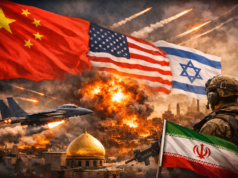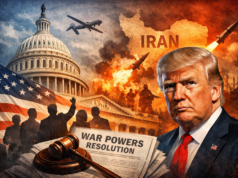
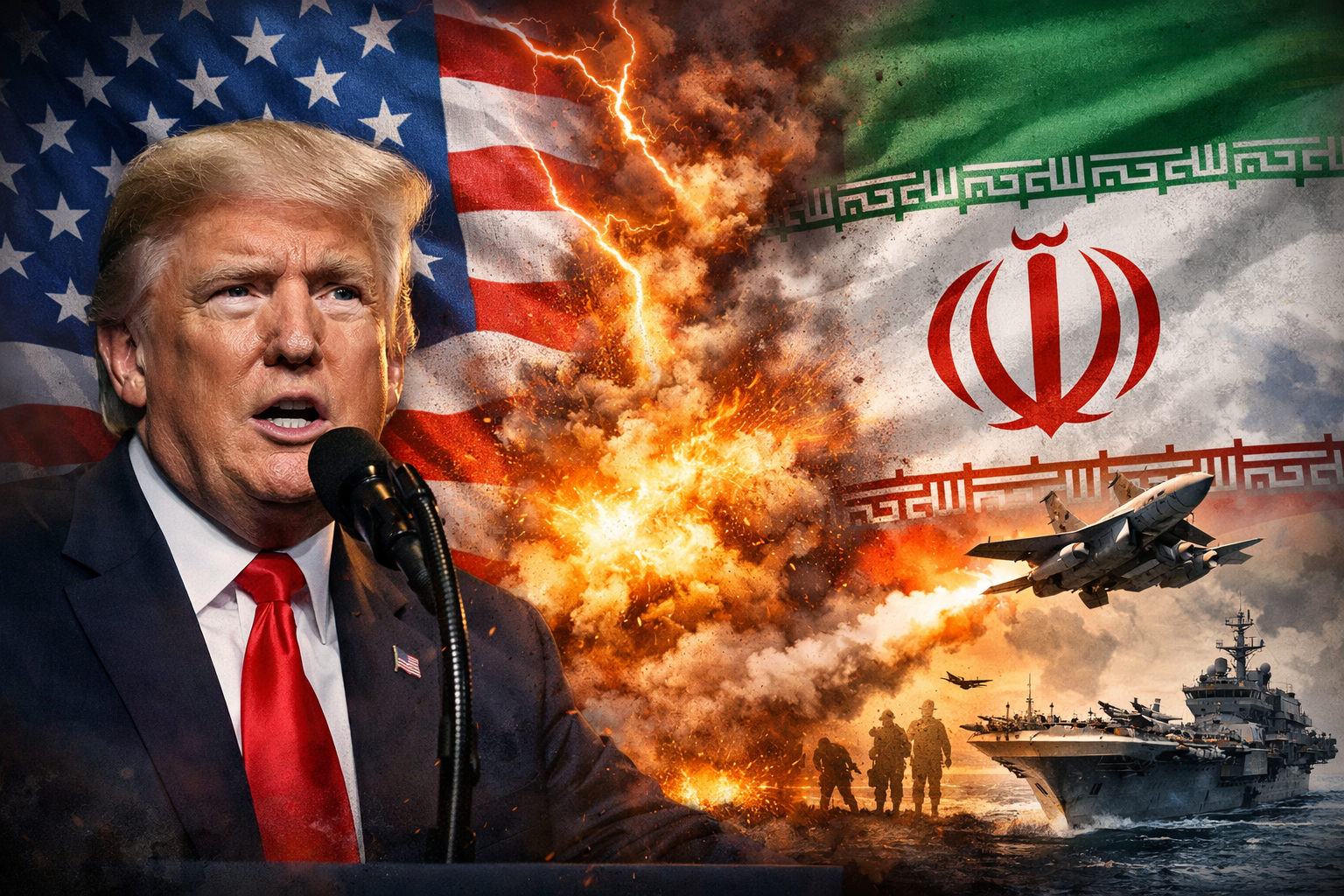
People often use the phrase “declare war” when a president announces major military action. In U.S. law, though, “declaring war” means something very specific: Congress passes a formal declaration of war and the president signs it.
As of February 28, 2026, available reporting shows President Donald Trump announced “major combat operations” against Iran, but Congress has not issued a formal declaration of war.
What happened today
Early on February 28, 2026, President Trump announced that the United States had begun “major combat operations” in Iran in an operation the administration called “EPIC FURY,” with targets described as Iranian military capabilities such as missile systems and naval forces.
Multiple outlets also described coordination with Israel and rapid escalation risks, along with immediate political pressure inside the U.S. for Congress to vote on war powers measures related to Iran.
That set of facts fuels the confusion: major combat operations can look like “war” in everyday speech, even when no one files a formal “declaration of war” in legal terms.
What “declare war” means in the U.S. system
The Constitution gives Congress the power “to declare War.”
That matters because a president cannot unilaterally create a formal declaration of war under U.S. constitutional design. The president can order military operations as commander in chief, but Congress controls declarations of war, funding, and many forms of statutory authorization.
Historically, Congress rarely uses formal declarations anymore. The U.S. Senate’s own explainer says Congress approved its last formal declaration of war during World War II, and later conflicts typically relied on authorizations or other legal theories instead.
So did Trump declare war on Iran?
No—nothing in the reporting indicates that Congress passed a formal declaration of war against Iran on February 28, 2026, and the public discussion in Washington centers on whether Congress will vote on war powers resolutions or a use-of-force authorization in the coming days.
What Trump did do, based on his own announcement and subsequent coverage, involves initiating large-scale military action. People may call that “war” conversationally, but U.S. law treats it differently unless Congress enacts a declaration of war (or at least a specific authorization to use force).
Why presidents launch military action without a formal war declaration
Modern U.S. conflicts often start without formal declarations for a mix of political and legal reasons:
Presidents argue they can act quickly under commander-in-chief authority, especially when they claim they need to protect U.S. forces, deter attacks, or respond to fast-moving threats.
Congress sometimes prefers narrower authorizations (AUMFs) that approve force but avoid the symbolism and open-ended scope that “declaration of war” implies.
Some conflicts proceed under contested interpretations of executive power plus congressional funding and oversight, even when Congress never votes on a clean “yes/no” authorization at the front end.
This pattern sits at the center of today’s debate.
The War Powers Resolution and what it requires next
Congress passed the War Powers Resolution (codified in 50 U.S.C. Chapter 33) to shape how presidents use force without a formal declaration of war.
Two provisions matter a lot in practice:
48-hour reporting requirement. When the president introduces U.S. forces into hostilities (or certain related situations), the law requires the president to submit a written report to congressional leaders within 48 hours.
60-day clock (plus a possible 30-day extension). The law lays out a framework under which the use of forces must end within 60 days unless Congress declares war, passes specific authorization, or otherwise meets the statute’s conditions. It also allows a limited extension of up to 30 days for safety-related withdrawal needs.
In other words, even if people call the current operations a “war,” Congress still holds tools to force a vote, authorize the operation, restrict it, or order withdrawal—depending on how lawmakers use those tools and how courts and politics respond.
What Congress says it will do
Several reports say Congress already planned votes related to war powers and Iran, and the strikes increased the pressure to move quickly.
Coverage from congressional and public-media outlets indicates that lawmakers from both parties have discussed forcing votes as soon as next week, including measures that would curb or condition the president’s ability to continue strikes without explicit congressional approval.
These votes matter because they can clarify whether Congress wants to:
Back the operation with a tailored authorization
Limit it to specific missions (for example, defensive actions or limited targets)
Block it outright through a war powers measure or restrictions tied to appropriations
Congress often argues over which option fits the facts on the ground, the intelligence picture, and the political costs.
“Major combat operations” versus a legal state of war
The phrase “major combat operations” signals scale and intent. It tells the public the military action goes beyond a one-off strike.
But U.S. law does not automatically convert “major combat operations” into a formal declared war. Congress must take that step.
That gap creates the headline confusion. A president can talk like wartime leadership and still operate in a legal posture that looks more like “use of force” than “declared war.”
The arguments you will hear from both sides
You will likely see two broad frames—often at the same time.
Supporters’ frame: They will argue the president must act to protect U.S. interests, defend allies, and reduce threats that the administration describes as imminent or escalating, and they will treat speed and surprise as essential.
Critics’ frame: They will argue the Constitution gives Congress the key power to declare war and authorize sustained hostilities, and they will say presidents should not expand conflicts without a vote that makes lawmakers share responsibility.
Both sides also argue over what counts as “self-defense,” what intelligence supports the operation, and whether military action helps or hurts longer-term security goals. News coverage today reflects that split, especially in early reactions from lawmakers and analysts.
What to watch next
If you want to track whether this becomes a legally authorized war—or remains an executive-led military campaign—watch for these concrete signals:
1) A formal authorization vote (AUMF) or war powers vote. Congress can pass a specific authorization to use force, or it can pass a war powers measure aimed at limiting the operation. Either path clarifies political support.
2) The War Powers report. Under the 48-hour requirement, the White House typically sends a formal notification to Congress that frames the legal basis and objectives. That document often shapes the next phase of the debate.
3) The administration’s stated end state. Officials can describe objectives like degrading capabilities, deterring attacks, protecting shipping lanes, or pressuring leadership. When the administration’s objectives expand, Congress often responds more aggressively.
4) Escalation dynamics. Iran’s responses and the region’s reactions can push Congress toward authorization, restraint, or new conditions tied to funding and oversight.
FAQ
Can a U.S. president declare war?
No. The Constitution assigns the power to declare war to Congress.
Can a president start military action without Congress?
Yes, presidents often initiate military action, and the U.S. system then relies on war powers law, appropriations, and oversight to shape what happens next.
Has Congress declared war on Iran?
No public record or credible reporting today shows Congress passed a formal declaration of war on Iran. Instead, reporting focuses on upcoming war powers and use-of-force votes.
What would change if Congress passed an authorization to use force?
An AUMF (or similar authorization) would give the operation clearer statutory backing and could define limits, objectives, reporting requirements, geography, and duration—depending on how Congress drafts it.
Sources consulted: Reuters, Associated Press, PBS NewsHour, Roll Call, NPR member-station reporting, U.S. Senate historical guidance, and U.S. legal texts via Cornell Law and Constitution Congress.