
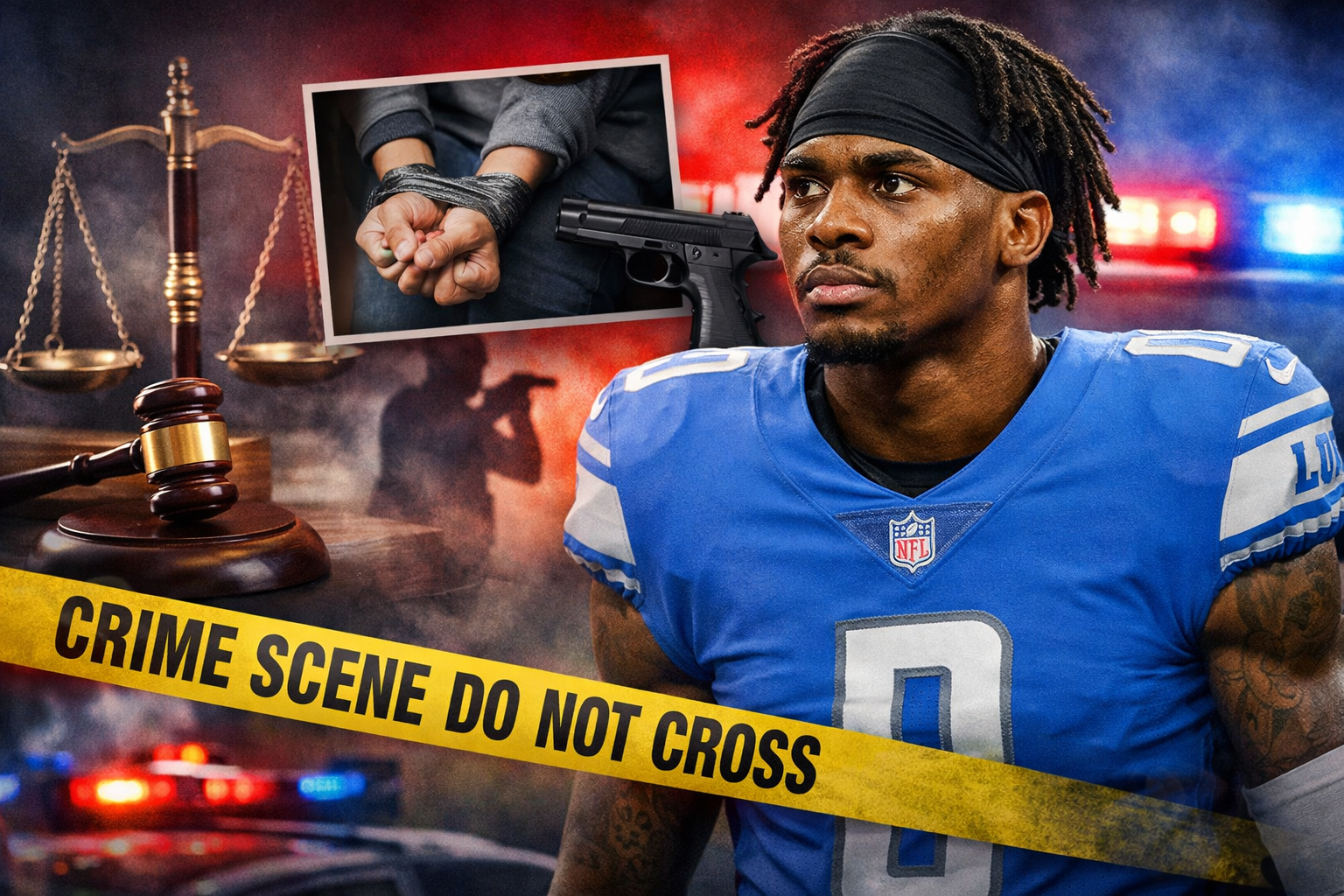
A Florida court order has pulled Detroit Lions cornerback Terrion Arnold’s name into a serious criminal case involving kidnapping and armed robbery allegations in the Tampa Bay area. The order does not charge Arnold with a crime, but it describes a chain of events that investigators and a judge say began after thieves targeted a short-term rental associated with Arnold.
The key document centers on pretrial detention for a defendant named Boakai Eugene Hilton. In that order, Hillsborough County Circuit Judge J. Logan Murphy laid out allegations, referenced text messages, and described how prosecutors believe a group attempted to recover stolen property through “vigilante justice.”
What follows breaks down what the court order alleges, what authorities have charged so far, what Arnold’s representatives have said, and what to watch as the case moves through the courts.
Key takeaways
A Florida judge granted prosecutors’ request for pretrial detention for Boakai Eugene Hilton on multiple first-degree felony charges tied to the alleged kidnapping and armed robbery of three victims.
The judge’s order says the alleged incident stemmed from two thefts at a Largo Airbnb rental that Arnold and others used, with stolen items reportedly including designer bags, cash, jewelry, and an NFL-issued phone.
The order states Arnold has not faced criminal charges in the case.
A representative for Arnold disputed earlier claims that two defendants served as Arnold’s security and family, according to local reporting and follow-up coverage.
What the Florida court order says about the alleged plot
The ClickOnDetroit report describes a seven-page order filed Feb. 24 in Hillsborough County Circuit Court. Judge J. Logan Murphy wrote that prosecutors presented evidence suggesting an armed robbery and kidnapping plot occurred as retaliation for thefts from an Airbnb rental in Largo that Arnold rented.
According to the order, Arnold hired a private driver, Yan Lopez, to transport Arnold and friends. During that period, thieves reportedly hit the rental twice. The order lists stolen items that included designer bags, $100,000 in cash, an $80,000 necklace, and a cellphone the NFL issued to Arnold.
Judge Murphy wrote that Arnold began to suspect Lopez had involvement in the burglaries. The order says Arnold reported the theft to authorities, but it also says Arnold and others decided to pursue their own solution rather than rely on law enforcement.
The order then describes how prosecutors say the group lured victims to an apartment. Judge Murphy wrote that co-defendant Jasmine Randazzo allegedly brought Daniel Tenesaca to her apartment after he expressed romantic interest, and the judge identified Arianna Del Valle as Arnold’s girlfriend and said Del Valle instructed Randazzo to act as “bait,” with promises of payment from Arnold and his friends.
When Tenesaca arrived with Soljah Anderson, the order says two men—identified as co-defendants Lyndell Hudson and Christion Williams—confronted them while armed. The judge described an hours-long incident and said the group held the victims in a bedroom, questioned them, and assaulted them.
The order says Lopez later entered the apartment and suffered assault as well, while assailants demanded the return of stolen property and Arnold’s phone. The judge wrote that the order found no evidence that the victims participated in the original Airbnb theft.
Judge Murphy also wrote that Hilton appeared to coordinate the incident through text messages and a group chat. The order references instructions to confirm whether someone had a gun and an allegation that Del Valle should show the encounter over FaceTime so Hilton could see and hear what happened. The order also quotes a message that referenced waiting until “terrion [a]nd Boakai [Hilton] and Fredo” arrived at the apartment complex.
Who has been charged, and what the court did with Hilton’s bond
The Feb. 24 order that ClickOnDetroit described focuses on Boakai Eugene Hilton and the state’s request to keep him jailed before trial. Judge Murphy granted pretrial detention and listed three charges of kidnapping to harm or terrorize and three charges of robbery with a firearm. The order describes each as a first-degree felony punishable by life in prison under Florida law.
In granting detention, the judge wrote that prosecutors met the threshold for showing a “substantial probability” that Hilton committed the offenses. The order also says no release conditions would adequately protect the community or preserve the integrity of the judicial process, citing the strength of the evidence and the risk of intimidation or coordination among co-defendants.
FOX 13’s coverage similarly reports that Hilton faced three counts of kidnapping with intent to inflict bodily harm or terrorize and three counts of robbery with a firearm, and it connects the alleged crimes to the earlier Largo theft reports tied to Arnold’s rental.
The broader Tampa investigation and the “web” of suspects
Reporting around the case describes multiple defendants and a timeline that stretches across Pinellas County and Hillsborough County. FOX 13 reports that the thefts occurred at a short-term rental in Largo, followed by the alleged kidnapping and armed robbery at an apartment complex in Tampa Palms (Eagles Point), with detectives tying multiple suspects to the effort to recover property.
This structure matters because it shapes how prosecutors describe motive. In both the court-order reporting and the detective testimony described by FOX 13, the core theory centers on retaliation and recovery—people believed someone stole valuable property, then decided to use force to get it back rather than let law enforcement handle the dispute.
At the same time, the public record that news outlets have described still centers on defendants and alleged accomplices, not on charges against Arnold. ClickOnDetroit states that Arnold has not been charged with a crime.
What Arnold’s camp has said about the alleged ties to defendants
Some early coverage described Hudson as part of Arnold’s security and described Williams as Arnold’s cousin. Later reporting added a clarification: a representative for Arnold disputed both points. FOX 13 reports that Arnold’s representative denied those claims, stating Hudson did not work as Arnold’s security guard and Williams did not qualify as Arnold’s cousin.
Sports Illustrated’s Lions coverage also points to that clarification and notes that FOX 13 added information to address the alleged ties.
NBC Sports’ Pro Football Talk similarly flagged the uncertainty around those claims and highlighted the later editor’s note that described the representative’s denial.
Those denials do not resolve the factual questions in the case, but they do matter for public interpretation. A person can share a social connection to someone involved in a crime without holding a formal relationship such as “security” or “family.” Courts and investigators typically focus on communication, planning, and actions rather than labels.
What the court order does—and does not—mean for Arnold
A court order that discusses a person does not automatically make that person a defendant, suspect, or target. The Feb. 24 order, as described in reporting, addresses whether prosecutors can keep a defendant jailed while the case proceeds. That detention process uses a different standard than a criminal trial and does not produce a guilty verdict.
ClickOnDetroit emphasizes that Arnold has not been charged. That point remains the most important legal fact for fans to keep in mind right now.
The same order, however, describes messages and alleged planning that reference Arnold and people close to him. That creates reputational risk even when prosecutors never file charges. It also increases scrutiny on what Arnold knew, what investigators can corroborate, and how the case record develops through motions and testimony.
Why pretrial detention matters in cases like this
Pretrial detention can signal that the court views the allegations as serious and the evidence as strong, at least for the limited purpose of bond. Judge Murphy wrote that the evidence appeared consistent across victim statements and text-message chains introduced at the hearing, and he described the weight of evidence as “overwhelming” in the detention context.
Detention also affects how a case unfolds. Defendants who remain in custody often face higher pressure to seek plea deals, while prosecutors can continue building their case with less risk of witness intimidation or evidence tampering. The judge explicitly cited concerns about coordination among co-defendants and potential intimidation risks if Hilton left jail.
Still, detention does not prove guilt. A jury trial (or a plea) later determines guilt under the “beyond a reasonable doubt” standard. The detention record can preview key evidence, but it does not replace trial.
Potential NFL implications: what typically happens when allegations surface
NFL teams and the league often take a cautious approach when a player’s name appears in a criminal case, especially when prosecutors have not filed charges against the player. Teams usually gather information, consult counsel, and monitor court filings rather than issue immediate discipline.
The NFL’s Personal Conduct Policy allows the league to discipline players even if criminal proceedings do not result in a conviction, depending on what an NFL investigation finds. NFL communications about the policy have stated that discipline can apply even without a conviction if the league determines a player engaged in prohibited conduct.
In practice, the league often waits for clearer facts, such as police reports, charging documents, corroborated messages, or sworn testimony that directly addresses the player’s actions. At this stage, reporting indicates that Arnold has not faced charges, and ClickOnDetroit reports that the outlet contacted the Lions for comment.
Timeline: how the alleged events unfolded, according to reporting
Here is the timeline that reporting currently outlines, with the caveat that investigators and courts can revise details as new evidence emerges.
Authorities received reports of two thefts from a short-term rental in Largo that Arnold rented, with stolen items reportedly including high-end bags, firearms, cash, jewelry, and a cellphone.
Court filings and detective testimony described a plan to lure several men to an apartment in the Tampa Palms area, where armed suspects allegedly held victims and demanded the return of stolen items.
A Hillsborough County judge later issued a pretrial detention order for Boakai Eugene Hilton, describing text-message evidence and alleged coordination tied to the incident.
News coverage then highlighted that Arnold’s name appeared in the order while also reporting that authorities have not charged Arnold.
What happens next in the criminal case
In Florida felony cases like this, defendants typically move through a sequence that can include arraignment, discovery, motions hearings, and either plea negotiations or a trial. The court can revisit bond, detention, and evidence issues as the case progresses, especially if defendants challenge the admissibility of statements, searches, or digital evidence.
Text messages appear central to the detention decisions described in reporting. That often leads to disputes about authentication, context, and whether messages reflect real intent or exaggeration. Prosecutors may also rely on phone records, location data, surveillance footage, and witness testimony to corroborate what messages suggest.
For Arnold, the practical question centers on whether investigators treat him as a witness, a victim, or a potential subject of further inquiry. No public report cited here says authorities have charged him.
Why this story has drawn attention beyond Tampa Bay
The story sits at the intersection of celebrity, sports, and criminal justice. High-profile athletes often face elevated risk from theft and burglary, especially when criminals believe they can find valuable property at temporary rentals. Reporting in this case describes stolen cash and luxury items, and detectives have framed the later violence as an effort to recover those items.
The case also highlights a common legal theme: courts and prosecutors often treat self-help retaliation harshly, even when the underlying grievance involves a real theft. The judge’s order uses strong language about “vigilante justice,” and that framing can influence charging decisions, detention outcomes, and eventual sentencing if a jury convicts.
For the Lions, the story lands in an offseason context where teams evaluate roster building and player development. ClickOnDetroit notes Arnold’s first-round draft status and frames him as a key cornerback entering the 2026 season, which intensifies public interest.
Frequently asked questions
Has Terrion Arnold been charged with kidnapping or armed robbery?
No. Reporting on the court order explicitly states that Arnold has not been charged with a crime.
Why does Arnold’s name appear in the court order?
The judge’s order, as reported, connects the alleged plot to earlier thefts at a rental associated with Arnold and references messages and alleged planning that include his name. The order focuses on detention for a defendant, not on charging Arnold.
What charges does the court order describe for Boakai Eugene Hilton?
The order grants pretrial detention on three charges of kidnapping to harm or terrorize and three charges of robbery with a firearm, described as first-degree felonies under Florida law.
What did Arnold’s representative deny?
Local reporting says Arnold’s representative denied claims that Lyndell Hudson served as Arnold’s security and denied that Christion Williams counted as Arnold’s cousin.
Could the NFL discipline Arnold even without criminal charges?
The league’s Personal Conduct Policy can allow discipline even without a criminal conviction if the league finds prohibited conduct. Whether the league acts often depends on the facts it can verify.
Bottom line
A Florida judge’s pretrial detention order places Terrion Arnold’s name inside a criminal narrative tied to an alleged kidnapping and armed robbery, but authorities have not charged Arnold.
The case now turns on how prosecutors prove their allegations against the charged defendants and how the court evaluates evidence like text messages, victim statements, and corroborating records. Until prosecutors file charges or investigators publicly name Arnold as a suspect, the most accurate framing remains narrow: the court order links the alleged motive and communications to Arnold’s circle, while the criminal charges currently target other individuals.