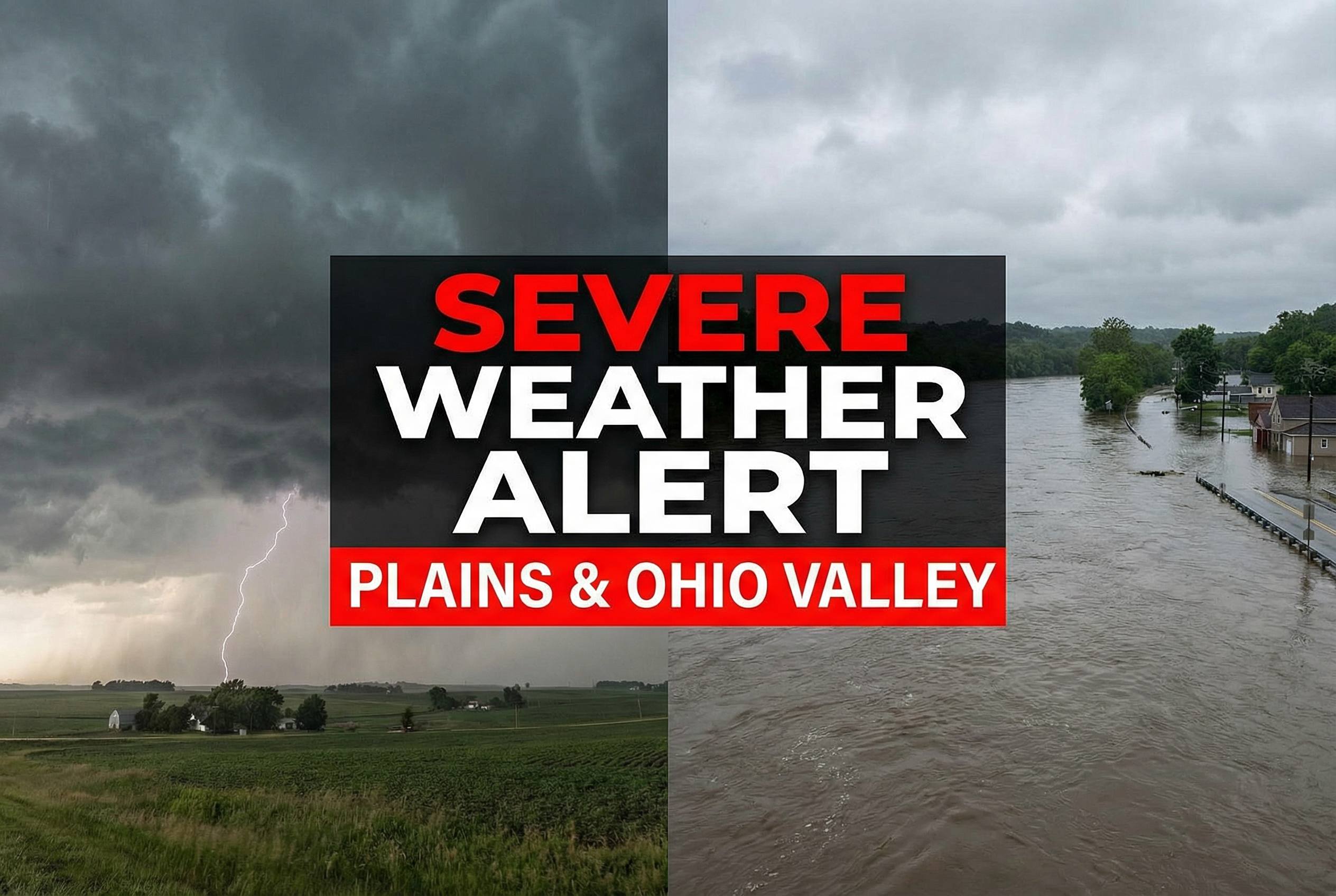
A multi-day stretch of March weather is developing for parts of the central United States with multiple rounds of thunderstorms anticipated to enter the Plains and the Mississippi and Ohio Valleys. Not every day will be a “large-scale” severe storm day, but the continued presence of numerous storm systems can lead to stacking of the impacts of those storms, increasing the probability of at least one of them becoming severe, and increasing the likelihood of a prolonged period of heavy precipitation leading to increased flood concerns due to increasing levels of soil moisture and increasing amounts of water in streams.
National Outlook References
References to National Outlooks mentioned in this article include the National Oceanic and Atmospheric Administration’s (NOAA) Storm Prediction Center (SPC), which provides outlooks on severe weather events and the National Oceanic and Atmospheric Administration’s (NOAA) Weather Prediction Center (WPC) which provides outlooks on heavy precipitation events and other weather-related hazards.
The Overall Pattern Behind the Active Period
The atmospheric pattern that exists over the central U.S. during periods like this one often allows for multiple storm systems to develop over the Plains and Midwest and subsequently track to the northeast into the Ohio Valley. This occurs primarily due to the presence of a trough in the upper level jet stream over the western U.S. allowing for the development and tracking of storm systems into the Plains and Midwest. At the same time, warm air is attempting to surge north and eastward across the central and eastern U.S. This warm air plays a crucial role in supporting the development of widespread showers and thunderstorms when it collides with cooler air and/or a strong cold front.
Impact of “Multiple Rounds” of Rainfall on Flooding
Flooding risk is not limited to just one very intense thunderstorm. Repeated rounds of moderate to heavy rainfall can contribute to flooding issues as well, particularly if the soil is already saturated prior to subsequent rounds of rainfall. Additionally, repeated rounds of rainfall can reduce the amount of time available for the soil to absorb excess moisture, thereby increasing the likelihood of run-off, and therefore increasing the rate at which creeks and rivers rise, and increasing the likelihood of urban flooding.
Timing of the Severe Weather Risk
Given that this is a multi-day period of severe weather, the most effective method of forecasting this type of activity is in phases rather than singular events.
Initial Phase: Isolated Severe Storms Develop in Southern/Central Plains
One of the first indicators of the severe weather risk in the national outlooks is the indication of isolated severe storms developing in southern Kansas and northern Oklahoma, with the primary concern being large hail.
During this initial phase, severe storms can develop in a relatively scattered manner, resulting in localized instances of large hail and damaging wind gusts within a narrow corridor.
Middle Week Phase: Severe Storm Risk Increases for Western Ozark Region and Moves Eastward into Ohio Valley
As the next storm system approaches the central U.S., the severe weather risk will expand from the southern Plains into the western Ozark region, with the possibility of large hail and damaging wind gusts and marginal tornado potential where storms continue to be discrete (super cellular).
Further to the northeast, storms may not reach their maximum intensity, however, the environment remains conducive to the development of localized patches of marginally severe hail and wind, extending into portions of the Mid-Mississippi Valley and the Ohio Valley.
Late Week to Weekend Phase: Heavy Rain Becomes More Prominent in Hazardous Forecasting
As the active period continues, the hazardous forecasting outlooks from the WPC begin to emphasize both an ongoing severe storm threat, as well as an expanding heavy rain threat across much of the central U.S.
At this point in the pattern, flooding risk tends to increase, as repeated rounds of heavy rain begin to saturate the soil and contribute to increased runoff into creeks and rivers, with the areas most vulnerable to flooding shifting from day to day, however, the overall trend is that repeated rounds of rain and thunderstorms can create conditions conducive to flooding.
Hazards Associated with Each Day
Each day associated with severe storms presents unique hazards. Within the context of a pattern that produces repeated rounds of severe storms, there are four hazards that tend to be the most prominent.
Damaging Wind Gusts
Damage to buildings, trees, power poles and lines, and high-profile vehicles on highways can result from straight-line wind produced by thunderstorms. Wind risk increases when storms form lines (squall lines) or bowing segments of storms, which can cover greater distances than individual, isolated storms, even though the greatest wind speeds are usually confined to the briefest durations at a given location.
Large Hail
Large hail is often the most common “first” severe hazard in Plains-based severe weather setups, especially when the atmosphere includes sufficient instability to allow for the formation of rotating updrafts, and sufficient wind shear aloft to allow such updrafts to maintain their rotation.
Hail can damage roofs, vehicles, and crops, and can create hazardous driving conditions if hail accumulates on roads.
Tornado Potential (Usually Localized, But Worth Planning For)
Within multi-day Plains-to-Valley severe weather patterns, the potential for tornadoes depends upon the mode of the storm. If storms are able to remain relatively isolated and rotate sufficiently, the potential for tornadoes increases. However, if storms quickly develop into complex clusters of storms, the potential for tornadoes decreases, and the risks from damaging wind gusts and flooding may increase.
Key Practical Takeaway: Have a Shelter Plan Ready for Tornadoes
Many people are surprised by the fact that they were not prepared for a tornado when there was no tornado reported in their area on a particular day. They did not realize that tornadoes can occur in seemingly non-severe weather days. Therefore, regardless of whether you believe that a tornado will occur or not, have a shelter plan ready.
Practical Steps to Follow During an Active Multi-Day Severe Weather Pattern
You do not need a complicated plan, you need a simple plan that works at 2 a.m.
Severe Weather Checklist
Make certain you have multiple ways to receive severe weather warnings including phone alerts, a reliable weather app, local TV/Radio, and (if possible) a NOAA Weather Radio if you reside in a high-risk area.
Identify your safest location before storms arrive. Typically, basements are the safest locations, however, if you do not have a basement, identify the smallest interior room located on the lowest floor of your structure, and away from windows.
Charge all devices early. Power outages are common during wind and hail events.
If you are traveling, determine in advance what you will do if a warning is issued while you are on the road. It is always better to have a plan in place in advance, versus trying to come up with a plan at 2 a.m. when the sky is turning green and hail is beginning to fall.
Flood Safety Checklist
Do not attempt to drive through water covering the road. Water depth cannot be accurately determined, the road surface may be compromised, and even a shallow amount of moving water can easily sweep a vehicle away.
If you live in a flood-prone area, remove debris from nearby storm drains if it is safe to do so. Clogged storm drains can exacerbate flooding in your neighborhood.
Remove valuable items from the basement floor if heavy rain is expected. Basements can accumulate water, even when streets appear to be dry.
Follow evacuation orders from local authorities immediately. Flooding situations can escalate rapidly.
Following Updates Without Feeling Overwhelmed
When the weather is active for an extended period, forecasts will continue to evolve. This is typical, not indicative of uncertainty from forecasters.
Here is a simple way to monitor changing forecasts:
Monitor the national severe weather outlook each morning, and then again in the late afternoon as more detailed information develops.
Understand the differences between a Watch and a Warning. A Watch indicates that conditions are favorable for severe weather, whereas a Warning indicates that severe weather is occurring or imminent in your area.
For flooding, monitor local flood watches and Flash Flood Warnings, and pay close attention to repeated rounds of rain. Often the third round of rain results in the largest impact, simply because the ground and streams are already saturated from previous rounds.
Conclusion
Severe storms and flooding risk can rapidly escalate when the atmosphere allows for repeated rounds of storm systems, and this is the type of scenario currently unfolding across parts of the Plains and the Ohio Valley.
The key to planning effectively for this type of situation is to consider it a multi-day event. Although the first round of rain may be mild in your community, subsequent rounds could develop under more unstable conditions, with stronger wind shear aloft, and wetter ground.
Daily update monitoring, having adequate warning methods established, and making cautious decisions regarding flooded waters will help you navigate this potentially hazardous situation.