News involving a public figure’s family can spread fast.
It can also spread with errors.
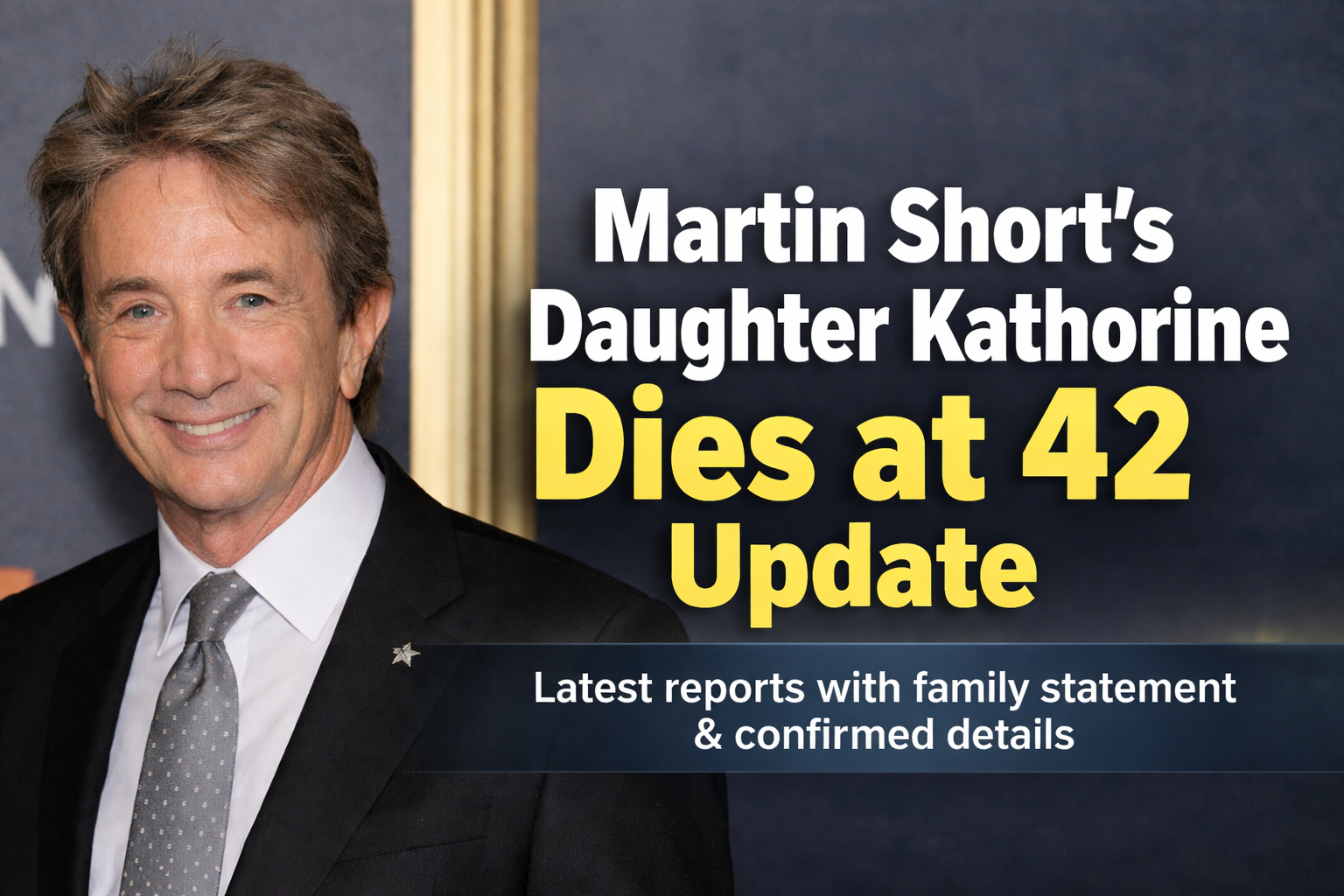
As of the latest published reports from major entertainment outlets, Martin Short’s daughter, Katherine Short, has died at age 42, and the family has confirmed her death in a public statement shared through media outlets. PEOPLE and Entertainment Weekly both published the family’s statement and reported that authorities responded to a call in the Hollywood Hills. Both outlets also noted that police described the call as involving a possible suicide, which is an important distinction while official determinations are pending.
This article takes a careful approach.
It focuses on confirmed facts, avoids harmful detail, and explains why responsible language matters when reporting on deaths that may involve suicide. Guidance from suicide prevention organizations warns that sensational coverage and detailed descriptions can increase harm, especially for vulnerable readers.
What has been confirmed
Two widely cited reports, from PEOPLE and Entertainment Weekly, state that Katherine Short died at 42 and that the Short family shared a statement asking for privacy. The statement describes the family as devastated and says Katherine “was beloved by all” and would be remembered for the “light and joy” she brought into the world.
PEOPLE’s report says the Los Angeles Fire Department responded to a Hollywood Hills home on February 23 and that the Los Angeles Police Department told the outlet the call concerned a possible suicide. Entertainment Weekly repeated that information while also emphasizing that the family requested privacy.
That wording matters.
In breaking news, early reports often rely on police or emergency response information. A final official cause and manner of death typically comes later through formal processes. For that reason, responsible reporting avoids presenting unconfirmed details as settled fact.
Why many headlines use stronger wording than the evidence supports
Many social posts and reposted headlines use direct phrasing like “died by suicide.”
That wording may appear before an official public determination.
In this case, the strongest clearly reported language in major outlets points to a possible suicide based on law enforcement information relayed to press outlets. PEOPLE and EW both frame it that way in the current reporting.
This does not mean the reports are false.
It means readers should separate three things:
- what the family confirmed
- what authorities reportedly told reporters
- what remains subject to official confirmation
That distinction helps prevent misinformation.
It also respects the family during an active and painful period.
Who Katherine Short was
Published reports describe Katherine Short as a mental health professional who worked as a licensed clinical social worker. PEOPLE says she worked in private practice and also part-time at Amae Health, where her work included community outreach, family support groups, peer support, and psychotherapy. Entertainment Weekly also described her work in mental health and community outreach.
PEOPLE reports that Katherine earned a bachelor’s degree from New York University and later a master’s in social work from the University of Southern California.
That part of the story deserves attention.
Coverage of celebrity families often collapses people into a single label, such as “someone’s daughter.” The available reporting shows a fuller picture: a person with a career, training, and community-facing work in mental health support.
She also appears to have kept a relatively private public profile.
PEOPLE notes that she remained mostly out of the public eye, though she attended some events with her father over the years.
Martin Short’s public profile and family context
Martin Short is one of the most recognizable comedians and actors in North American entertainment. Encyclopaedia Britannica describes him as an Emmy- and Tony-winning Canadian actor, comedian, and writer, known for work on SCTV, Saturday Night Live, films including Three Amigos! and Father of the Bride, and more recently Only Murders in the Building.
Entertainment Weekly identifies Katherine as the eldest of three children adopted by Martin Short and his late wife, Nancy Dolman. EW and PEOPLE both note that Dolman died in 2010. PEOPLE also names Katherine’s brothers as Oliver and Henry.
That family background explains why this news has drawn broad attention.
Martin Short has a long public career.
But the death itself remains a private family loss.
That balance is easy to lose in celebrity coverage.
The problem with rumor amplification
When a major name trends, social media posts often outrun verified reporting.
You can already see that pattern in the way this story circulates. Some posts repeat claims without context. Others copy stronger wording from secondary accounts. Some add unverified details that mainstream outlets did not confirm. The result is confusion, and sometimes harm.
This pattern affects readers in two ways.
First, it increases the chance of factual mistakes.
Second, it can turn a real family tragedy into viral content.
A better standard starts with basic verification:
- Use a primary report from a credible outlet.
- Check whether a family statement exists.
- Look for exact wording from authorities.
- Avoid adding details that sources did not confirm.
- Update carefully when official information changes.
That approach does not remove emotion.
It reduces preventable error.
Why responsible language matters in suicide-related reporting
Suicide prevention organizations have published clear guidance for journalists and content creators.
Samaritans states that explicit method details and sensational coverage can contribute to imitative behavior among vulnerable people, while careful reporting can support prevention and help-seeking.
Canada’s 9-8-8 media guidance makes similar points. It advises writers not to sensationalize suicide, not to describe the method, and not to provide location details. It also recommends telling people where they can seek help at the end of coverage.
These recommendations shape how responsible newsrooms handle stories like this.
They avoid lurid language.
They avoid speculation.
They center confirmed facts.
They include support information.
That does not “sanitize” the event.
It reduces the risk of causing additional harm.
How this story can be covered without causing extra harm
A careful article can still be complete.
It can include:
- confirmation of the death
- the family’s request for privacy
- Katherine Short’s life and work
- the limits of current public information
- support resources for readers
It should avoid:
- graphic descriptions
- unverified claims
- sensational headlines
- repeated mention of specific circumstances
- intrusive speculation about motive
This standard helps everyone.
It respects the family.
It protects vulnerable readers.
It improves accuracy.
The human side of public grief
Celebrity news often moves in cycles.
A headline breaks.
People react.
Old photos resurface.
Clips get reposted.
Commentary expands faster than facts.
But behind every viral item is a real family dealing with loss.
The Short family’s reported statement asks for privacy and emphasizes how Katherine will be remembered. That framing offers a better center for coverage than speculation does.
Public sympathy can be meaningful.
Curiosity can also cross a line.
Responsible readers and publishers can hold both truths at once: the story has public interest, and the family still deserves dignity.
What readers should watch for next
If this story continues to develop, reputable outlets will likely update their reports.
Readers should look for:
- direct updates from established outlets
- official statements or records, if publicly released
- corrections or clarifications to early reports
- careful wording around cause and manner of death
A good habit is simple.
Recheck the article timestamp.
Read beyond the headline.
Compare at least two credible sources.
That matters even more with sensitive stories.
Why Katherine Short’s profession makes this story especially poignant
Reports describing Katherine Short’s work as a licensed clinical social worker and her role in mental health support add a difficult layer to public reaction. PEOPLE and EW both describe her work in community support and mental health-related care.
It is important not to turn that detail into a narrative shortcut.
Mental health professionals are still people.
Public-facing helpers can also struggle.
No profession makes someone immune to pain.
Avoiding simplistic conclusions matters here.
The available reports support a respectful summary of her work.
They do not support speculation about private circumstances.
Conclusion
The core facts in public reporting are clear: Martin Short’s daughter Katherine Short has died at 42, and the family has expressed profound grief while asking for privacy. Major outlets also report that police described the call involved as a possible suicide, but careful reporting should keep that language precise unless and until official findings are publicly confirmed.
In moments like this, accuracy and compassion matter equally.
The most responsible coverage does not chase shock value.
It documents what is known, acknowledges what is not, and treats the people involved with dignity.
That is better journalism.
It is also better for readers.
If you or someone you know needs support
If someone is in immediate danger, call emergency services right away.
In Canada, the Government of Canada says people thinking about suicide can call or text 9-8-8, with support available 24/7, and links to provincial and territorial mental health resources are also available.
In the United States, the 988 Lifeline says support is available 24/7/365 and that conversations are free and confidential by call, text, or chat.