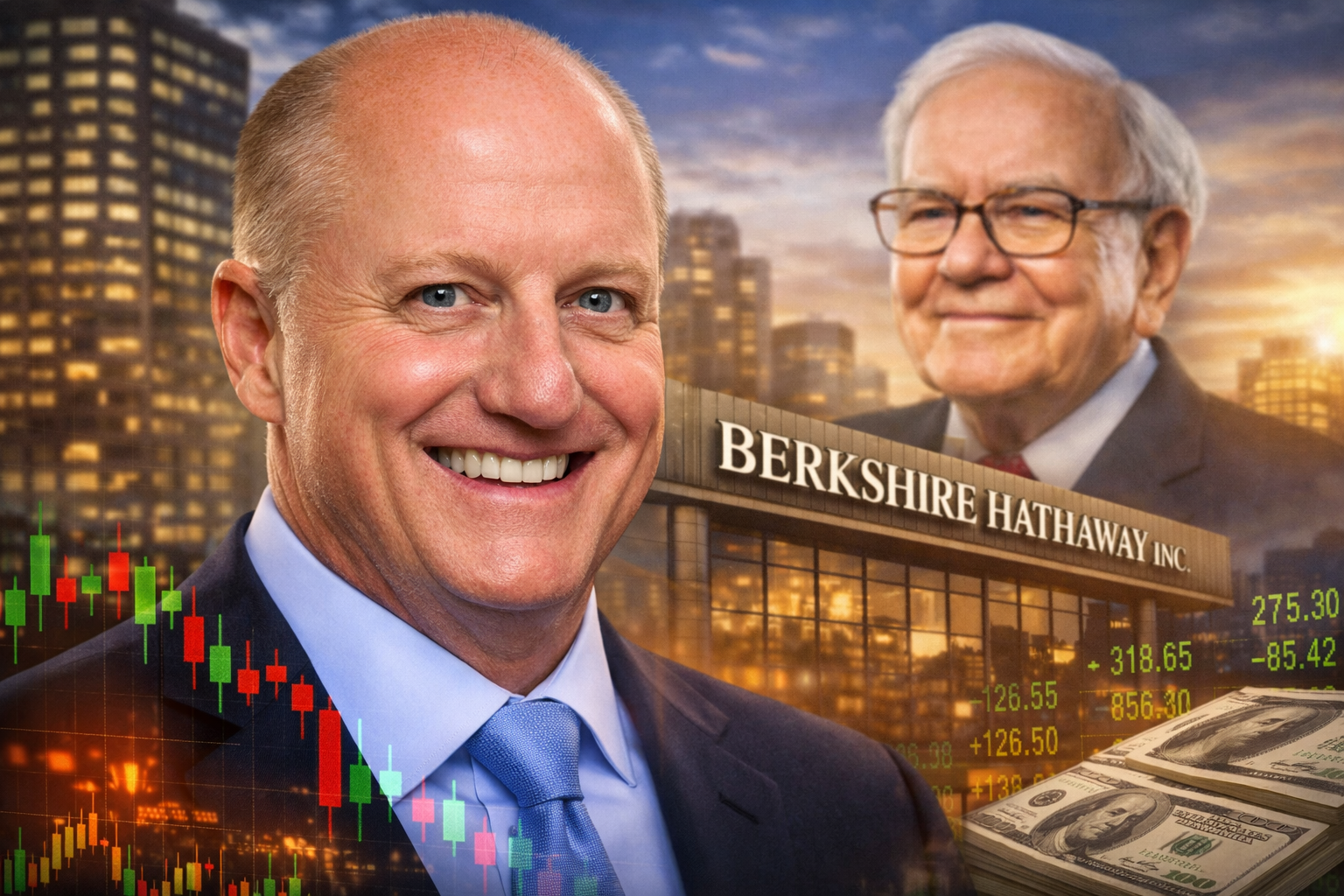
Greg Abel opened his first annual letter as Berkshire Hathaway’s chief executive with a simple, telling admission: Warren Buffett leaves behind a “very hard act to follow.” Abel took over as CEO in January 2026 after Buffett stepped down at the end of 2025, and the letter marks the clearest statement yet about how Abel plans to lead a company that many investors still associate almost entirely with Buffett’s personality, patience, and capital-allocation instincts.
The timing raised the stakes. Berkshire released Abel’s letter alongside its 2025 annual report and an earnings update, the same package that Buffett turned into required reading for generations of investors. Berkshire itself framed the moment as a transition milestone when it announced the annual report would include Abel’s first letter and pointed shareholders to the May 2, 2026 annual meeting in Omaha.
Abel’s message blended tribute and reassurance. He praised Buffett’s legacy, nodded to the culture Buffett and Charlie Munger built, and then focused on continuity: keep Berkshire’s operating philosophy intact, avoid rushed decisions, and protect the balance sheet that gives Berkshire its unusual flexibility.
Why This First Letter Matters More Than a Symbolic Handoff
Berkshire’s shareholder letter does more than recap results. It sets expectations for how the company thinks about risk, deals, stock buybacks, and portfolio choices. Buffett used the letter to teach, to warn against fads, and to explain mistakes in plain language. Investors now want to learn what Abel emphasizes when he owns the “final say” role instead of operating as the designated successor.
Abel also inherits a company with two very different engines. Berkshire owns a sprawling collection of operating businesses—insurance, rail, utilities, manufacturing, retail—while it also holds one of the world’s most watched stock portfolios. Buffett made both feel unified through one idea: disciplined capital allocation. Abel’s first letter needed to show that he understands that job as more than picking stocks or approving acquisitions.
“Very Hard Act to Follow”: What Abel Signals With That Line
Abel’s quote does two things at once. It acknowledges the obvious: Buffett’s reputation makes comparisons unavoidable. It also lowers the temperature on any “new sheriff in town” narrative by framing the transition as stewardship, not reinvention. Abel wrote that he felt honored and humbled to succeed Buffett, and he positioned his leadership as an extension of Berkshire’s established approach rather than a break from it.
That posture matters because Berkshire’s brand functions like an asset. Many shareholders stick with the company because they trust its decision-making and its reluctance to chase trends. Abel appears to understand that trust as something he must earn slowly, not something he can borrow indefinitely from Buffett’s name.
Continuity Over Shock: The “Framework” Message
Across the letter, Abel leaned on the idea of continuity in values and process. He highlighted the same pillars that Buffett and Munger repeated for decades: integrity, long-term thinking, conservatism in leverage, and a willingness to wait for the right opportunity. He also emphasized Berkshire’s decentralized structure, where operating companies run their own day-to-day decisions while headquarters focuses on capital and oversight.
This stance aims at a practical concern: investors worry that a successor might “do something” simply to prove leadership. Abel tried to remove that fear directly. He described Berkshire’s liquidity as both protection and optionality, and he pushed back on the idea that Berkshire needs quick, headline-grabbing moves to justify his tenure.
The Cash Mountain: Optionality, Scrutiny, and Expectations
Berkshire enters the Abel era with an enormous cash position, a topic that dominates investor debates about the company. Reuters reported Berkshire ended 2025 with about $373.3 billion in cash, and that figure gives Abel what Buffett often called “firepower” for large acquisitions when valuations make sense.
At the same time, that cash invites pressure. Shareholders ask whether Berkshire should deploy more capital, increase buybacks, or start paying a dividend. Abel addressed that scrutiny by stressing discipline and patience, echoing the Berkshire mindset that “doing nothing” can beat forcing a deal at the wrong price.
This tension sits at the center of Abel’s early challenge. If Berkshire holds too much cash for too long, investors may argue that the company wastes opportunity. If Berkshire spends aggressively, investors may fear it breaks the rule that protected the firm through multiple market cycles. Abel signaled that he prefers to accept criticism rather than overpay.
Results Context: Earnings Pressure and Write-Down Headlines
Abel’s first letter arrived alongside results that showed pressure in parts of the business. Reuters reported Berkshire’s fourth-quarter operating profit fell 30% to $10.2 billion, while net income slipped 3% to $19.2 billion. For the full year, operating profit fell 6% to $44.49 billion and net income fell 25% to $89 billion.
Write-downs added to the headlines. Reuters reported Berkshire took a $4.5 billion write-down tied to its Occidental Petroleum investment, and the company also recorded another write-down during 2025 related to Kraft Heinz.
Those figures matter for narrative even when Berkshire tells investors to focus on operating performance instead of quarter-to-quarter net income swings. Abel steps in during a period when Berkshire must defend its insurance profitability, absorb investment impairments, and still convince shareholders that the long game remains intact.
Insurance Still Drives Berkshire’s Machine
Insurance makes Berkshire different from most conglomerates. It generates “float,” a pool of policyholder funds that Berkshire can invest while it waits to pay claims. That structure fuels Berkshire’s ability to buy businesses and stocks without relying on heavy debt.
The results showed softness in insurance-related profit during the quarter. Reuters reported quarterly insurance profit fell 38% to $4.63 billion, and it pointed to factors including lower income trends and pricing pressures in areas like Geico and reinsurance.
Abel has spent years inside Berkshire’s operating structure, so he understands insurance’s central role even though Ajit Jain leads much of that domain. Investors will watch whether Abel pushes any strategic shifts in underwriting appetite, risk management, or cost discipline—especially because insurance outcomes can swing sharply during catastrophe-heavy years.
Portfolio Signals: Japan’s Gains, Kraft Heinz Regrets, and a “Brain Trust” Shift
Abel included details that matter to close Berkshire watchers because they hint at how he thinks about the investment book. He called Berkshire’s Kraft Heinz investment disappointing and acknowledged returns that fell short of what Berkshire expects for long-term capital.
He also highlighted Berkshire’s investments in Japanese trading houses, which Buffett began building several years ago. Business Insider reported that Abel’s letter broke out a table showing Berkshire paid about $15.4 billion for those positions, valued them at about $35.4 billion at the end of December, and collected about $862 million in dividends during the year.
Another notable signal involved internal investment responsibility. Business Insider reported Abel said Ted Weschler now oversees about 6% of Berkshire’s investments after taking over the portion previously managed by Todd Combs, and Abel framed Weschler as a key deputy whose influence extends beyond that slice of the portfolio.
Together, these details point to a leadership style that may feel more operational and committee-oriented than Buffett’s famously personal approach. Investors may see less of the single-author aura and more of an executive team model, especially as Berkshire manages both gigantic operating companies and a massive equity portfolio.
The Annual Meeting Format Change Reinforces the “Team” Theme
Berkshire’s annual meeting functions as a brand event and an investor relations moment. For years, Buffett and Munger dominated the Q&A, turning it into a marathon session that mixed humor with sharp market lessons. That tradition cannot continue in the same form.
Abel announced changes to the 2026 meeting lineup and Q&A structure. The Associated Press reported that Abel will share Q&A time with Ajit Jain and later with other leaders such as BNSF CEO Katie Farmer and NetJets CEO Adam Johnson.
This shift matters beyond stage logistics. It signals how Abel may communicate: more distribution of visibility, more emphasis on operating leaders, and a clearer division between Berkshire’s headquarters role and its operating companies’ expertise. It also gives investors more direct access to the executives who run major Berkshire assets.
Buffett’s Ongoing Presence: Chairman, Largest Shareholder, Quiet Influence
Abel now holds the CEO title, but Buffett still shapes Berkshire’s transition. The Associated Press reported Buffett remains chairman and the company’s largest shareholder, and Reuters described the CEO change while keeping Buffett in the chair role.
That structure can help Abel early on. Buffett’s presence can steady markets, maintain relationships, and reinforce culture while Abel grows into the role. Over time, though, Abel will need to show independent judgment, especially when Berkshire faces its next truly difficult capital allocation decision: a major acquisition, a large buyback program, or a portfolio repositioning that draws scrutiny.
The Real Test: Capital Allocation Under New Leadership
Berkshire’s best years came from a mix of patience and decisiveness: waiting through long stretches, then acting hard when a rare opportunity appears. Abel’s biggest challenge may involve timing rather than ideology.
The cash stockpile creates a constant question: when does Berkshire move from “ready” to “active”? The write-down headlines create another question: how aggressively should Berkshire reassess legacy positions when fundamentals change? And insurance volatility always lingers in the background.
Abel’s first letter suggests he plans to answer those questions with process and restraint. He wants to preserve the Berkshire “framework,” and he wants to avoid performative change.
What Investors Will Watch Next
Abel’s first letter likely won’t settle every debate, because Berkshire’s strategy unfolds over years, not quarters. Still, the letter sets signposts that investors can track.
Watch for how Berkshire uses cash during 2026: acquisitions, stock buybacks, or continued accumulation. Watch for how Abel talks about underwriting profitability and risk in insurance, because that engine funds everything else. Watch for portfolio messaging around concentrated holdings and legacy stakes that may face secular pressure.
Finally, watch for communication style. Buffett’s letters blended folksy clarity and sharp warnings. Abel’s letter indicates a more operational tone, with structured updates and a stronger emphasis on team leadership.
Bottom Line: A Respectful Handoff, With Patience as Policy
Greg Abel’s first shareholder letter as Berkshire Hathaway CEO reads like a deliberate statement of stewardship. He praised Warren Buffett, acknowledged the weight of succession, and tried to remove fear of sudden strategic shifts. He also offered enough detail—on cash discipline, investment organization, and meeting format—to show that he plans to lead actively without trying to imitate Buffett’s voice.
Abel now faces the long, unglamorous work of proving that Berkshire’s culture can outlast its most famous leader. Shareholders may accept that “hard act to follow” line as honest humility, but they will ultimately judge him on the same metric Buffett always emphasized: long-term results delivered the right way.