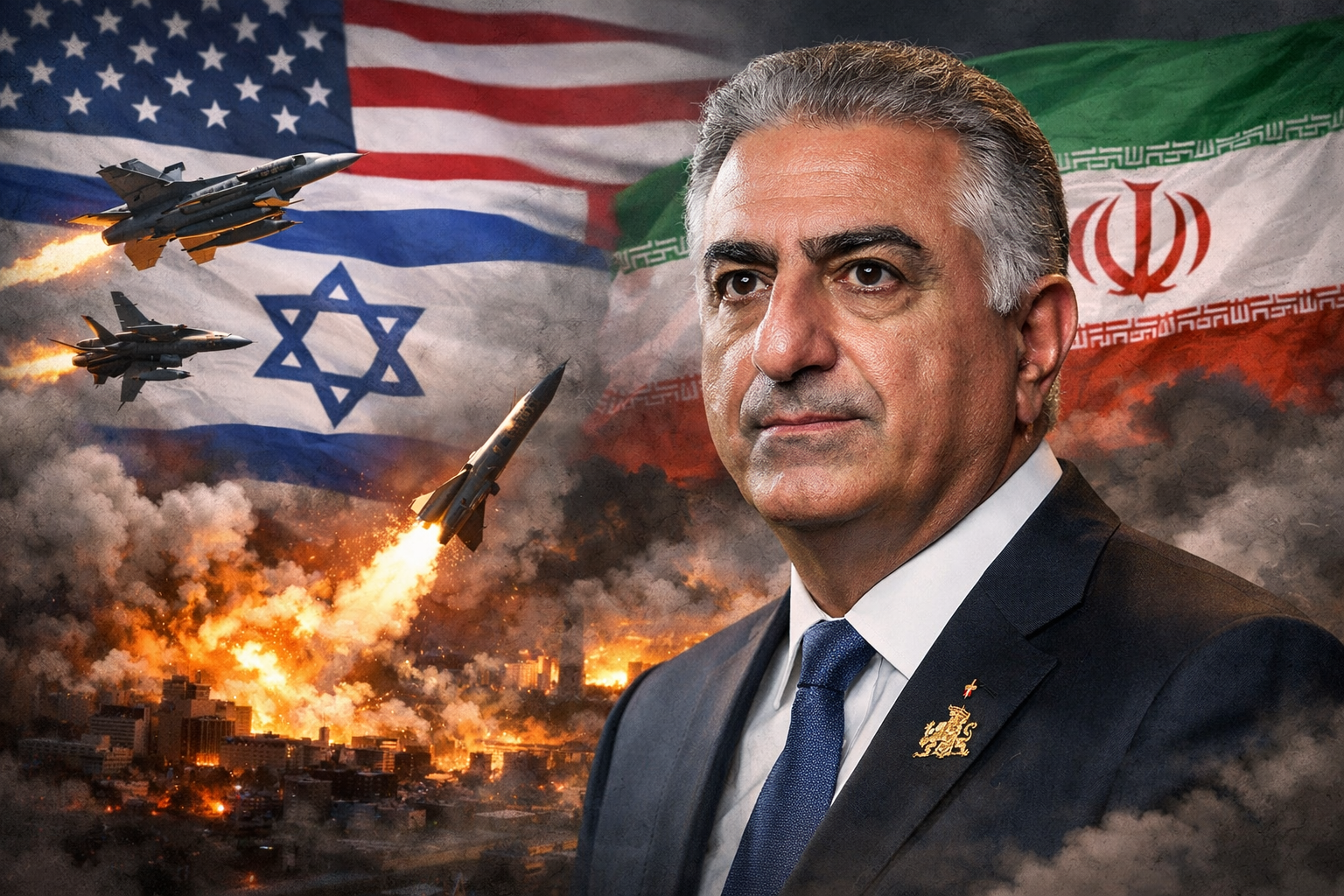
Reza Pahlavi, the exiled son of Iran’s last monarch and a prominent opposition figure, has described the latest U.S.-Israeli strikes on Iran as a “humanitarian intervention.” His wording lands in the middle of a fast-moving regional escalation that has already triggered Iranian retaliation and sharpened international divisions.
Pahlavi’s statement matters for two reasons. First, he carries symbolic weight as the most recognizable heir to the Pahlavi dynasty, even though Iran has not had a monarchy since the 1979 revolution. Second, he has tried to position himself as a unifying voice for a fragmented opposition, especially during recent waves of protest and unrest.
The use of the phrase “humanitarian intervention” also changes the frame of the debate. Supporters often use that label to argue that outside force aims to protect civilians from state repression rather than conquer territory. Critics often treat the label as political branding that can obscure the real human costs and legal controversies that follow any cross-border strike.
What happened: strikes, retaliation, and a widening crisis
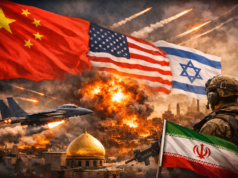
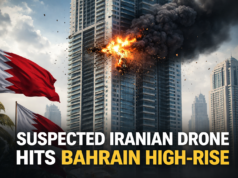
Reports on February 28, 2026 described coordinated U.S. and Israeli strikes on targets inside Iran, with governments and media outlets offering different descriptions of aims and impacts. Soon after, Iran launched retaliatory missile strikes across parts of the Gulf region, hitting or targeting areas where U.S. forces operate alongside regional partners, according to reporting from Reuters and others.
The retaliation pushed the crisis beyond a bilateral U.S.-Iran or Israel-Iran confrontation and into the territory of regional spillover. Several Gulf states host U.S. military bases and also try to avoid becoming battlegrounds for larger powers. When missiles cross their airspace or land on their territory, leaders face public pressure at home and strategic pressure from allies abroad.
Outside powers also moved quickly to stake out positions. Russia condemned the strikes and warned of broader regional consequences, while discussions about a U.N. Security Council session surfaced in coverage. These early reactions do not decide outcomes on their own, but they shape what diplomacy can realistically achieve in the next phase.
Who is Reza Pahlavi, and why his words carry weight
Reza Pahlavi has lived in exile for decades and has tried to build influence through advocacy, media appearances, and outreach to governments and diaspora communities. He has argued for a transition away from the Islamic Republic and has presented himself as a potential figure of continuity during a political rupture.
He does not command a single organized party inside Iran, and Iran’s opposition includes many ideologies that do not share monarchist nostalgia. That reality creates a ceiling on his direct control, but it does not eliminate his ability to shape narratives abroad. His statements can influence how foreign audiences interpret Iranian dissent, especially when major Western outlets cover his comments quickly.
In recent months, he has urged stronger pressure on Tehran and has suggested that outside action could accelerate political change. Reuters previously reported that he argued U.S. military intervention could “save lives” in some scenarios, which foreshadowed the language he used after the strikes. His critics often respond that exiled figures underestimate the complexity and danger of sudden state collapse.
What Pahlavi said: “humanitarian intervention,” not invasion
In his message, Pahlavi described the operation as a “humanitarian intervention” and argued that it targeted the Islamic Republic’s repressive apparatus rather than the Iranian nation. He also urged Iranian security forces to align with the public instead of the leadership, according to reporting that summarized his remarks and linked to his post.
That framing attempts to separate “Iran” from “the Islamic Republic,” a distinction many opposition activists use to rally nationalist pride against the current political system. It also aims to lower the stigma many Iranians attach to foreign military action, given the country’s history with outside interference and war. By calling the strikes humanitarian, he signals that he views them as protective or liberating, not punitive or expansionist.
At the same time, the phrase “humanitarian intervention” carries heavy baggage. The label evokes past interventions that supporters praise for stopping atrocities and critics condemn for destabilizing societies, producing civilian harm, and creating power vacuums. Pahlavi’s choice therefore invites both praise and backlash, even among people who dislike the Islamic Republic.
Why the “humanitarian” label triggers debate
Humanitarian intervention usually describes the use of force to prevent large-scale harm to civilians when a state commits atrocities or cannot protect its population. International law and diplomacy often treat such action as legitimate only under narrow conditions, typically involving U.N. Security Council authorization or clear self-defense claims. Governments and analysts disagree sharply about how those principles apply in practice, especially when major powers act without broad multilateral backing.
Pahlavi’s language tries to anchor the strikes in moral urgency rather than geostrategic calculation. He has pointed to repression, executions, and violent crackdowns as reasons the world should not treat Iran’s internal crisis as a purely domestic issue. In that view, the outside world should treat the Islamic Republic as a threat to Iranians first and to neighbors second.
Critics counter with a different moral argument: airstrikes, even when aimed at military or state targets, can still harm civilians, disrupt basic services, and deepen fear. Those critics often argue that the humanitarian label risks normalizing military escalation and crowding out nonmilitary tools like sanctions relief-for-compliance deals, prisoner arrangements, or mediated regional security talks.
What supporters hope to achieve with this messaging
Pahlavi’s supporters often see a narrow political opening when outside pressure meets internal unrest. They hope that strikes against key institutions weaken the state’s coercive capacity and encourage defections by security elites, which could lower the cost of mass protest. That logic explains why his statement addressed not only citizens but also members of the armed forces and security apparatus.
Supporters also aim to influence Washington and allied capitals. If foreign leaders believe that Iranians might seize the moment to demand change, they might feel more willing to sustain pressure rather than search quickly for a de-escalation deal. Pahlavi’s message, by framing events as a turning point, tries to present outside action as the start of an endgame rather than a new cycle.
A third goal involves the diaspora. Many Iranian communities abroad hold sharp disagreements about strategy, identity, and leadership, but major shocks can temporarily unify fundraising, messaging, and organizing. Pahlavi’s language attempts to supply a simple moral frame that can travel across platforms and languages quickly.
The risks and criticisms: legitimacy, blowback, and uncertainty inside Iran
Even among opponents of Tehran, many Iranians distrust foreign military action. They remember the Iran-Iraq War, sanctions-era hardship, and regional conflicts that produced long instability. That skepticism can push people to reject any opposition figure who appears to welcome strikes, especially if local communities experience fear, disruption, or casualties.
Another risk involves political legitimacy after any rupture. If a future transition looks tied to outside force, rivals can label it a foreign project and undermine it from day one. That dynamic can fuel factional conflict, encourage armed spoilers, and complicate any attempt to rebuild institutions. Pahlavi’s rhetoric tries to reduce that risk by emphasizing “Iran” as the beneficiary, but the perception challenge remains.
The biggest uncertainty involves on-the-ground realities inside Iran. Repression, censorship, surveillance, and the speed of events make it hard to measure public opinion in real time. Reuters has noted in other recent reporting that analysts find it difficult to gauge true levels of support for Pahlavi inside the country, even when his visibility rises abroad. That gap between external narrative and internal sentiment can produce strategic misreads.
How this intersects with nuclear talks and wider diplomacy
The timing of the strikes also intersects with a broader diplomatic track that had focused on Iran’s nuclear program. Reuters reported that talks recently showed some progress but ended without a breakthrough, with military threats in the background. When diplomacy runs alongside the threat of force, each side often tries to prove resolve, which can make compromise harder.
If the conflict expands, governments may deprioritize nuclear negotiations in favor of immediate military and deterrence concerns. That shift can lock the region into a cycle: strikes prompt retaliation, retaliation triggers further strikes, and the space for negotiated limits shrinks. Early reports already describe retaliatory attacks and heightened alerts across multiple countries, which can freeze diplomacy by raising the political price of talking.
International institutions could also take on a larger role, at least in messaging and emergency sessions. Russia has pushed condemnation and warned of broader risks, and coverage has pointed to calls for U.N. deliberation. Even when the Security Council cannot impose binding outcomes, debates there shape legitimacy claims that each side uses to rally partners.
What to watch next
The next days will likely turn on escalation management. Watch whether Iran and its partners widen the target set or whether they keep retaliation limited, and watch whether the U.S. and Israel signal restraint or broaden operations. Reuters reporting already describes effects across Gulf states and aviation routes, which can pressure governments to push for rapid de-escalation.
Watch the messaging from Iranian opposition groups inside and outside the country. If multiple currents echo Pahlavi’s framing, his influence may grow; if they reject it, his statement may deepen divisions. Also watch whether protests emerge and whether security forces respond with restraint or force, because those choices can determine whether a political opening expands or closes.
Finally, watch international alignment. Russia has already condemned the strikes, and other states will calibrate between condemning escalation, protecting their own security, and keeping ties with Washington. Those choices will shape whether the crisis moves toward contained confrontation, negotiated pause, or a wider regional war.
Sources referenced in reporting include Reuters and the Associated Press.